
If you have ever wondered what separates a truly clean candle from one that just looks pretty on a shelf, you are not alone. With growing awareness about indoor air quality and the chemicals lurking in everyday home products, shoppers are searching for candle brands that are transparent about ingredients, committed to non-toxic formulations, and hand-crafted with care. In this guide we break down the science behind candle wax, the red flags to avoid, and the qualities that define the best all-natural, non-toxic candle brand for your home.
Why Candle Ingredients Matter for Your Health
The average American burns candles in their home multiple times per week. Every time a wick is lit, the wax base, fragrance oil, and wick material all combust and release compounds into the air you breathe. That means the ingredients inside your candle directly affect your indoor air quality.
Indoor air quality is the measure of how clean or polluted the air is inside a building. Poor indoor air quality has been linked to headaches, respiratory irritation, and long-term health concerns. Choosing candles made from clean, plant-based materials is one of the simplest ways to protect your home environment.
The Paraffin Problem
Paraffin wax is a petroleum-derived byproduct that has dominated the candle industry since the 1800s. It is cheap to produce, which is why it remains the most widely used candle wax on the market. However, research raises concerns about what it releases when burned.
A Stanford University review notes that paraffin candles are suspected to give off toxic chemicals like toluene and benzene, both known carcinogens. A 2009 South Carolina State University study presented at the American Chemical Society found that paraffin wax candles produce toluene, alkanes, and alkenes, while soybean-derived wax did not produce these toxic emissions.
Soot and Respiratory Risks
Beyond chemical compounds, paraffin candles generate significantly more black soot than plant-based alternatives. That soot can stain walls, ceilings, and fabrics, and it introduces fine particulate matter into your lungs. For households with children, pets, or anyone managing asthma or allergies, this is especially important.
Why 100% Soy Wax Is the Gold Standard
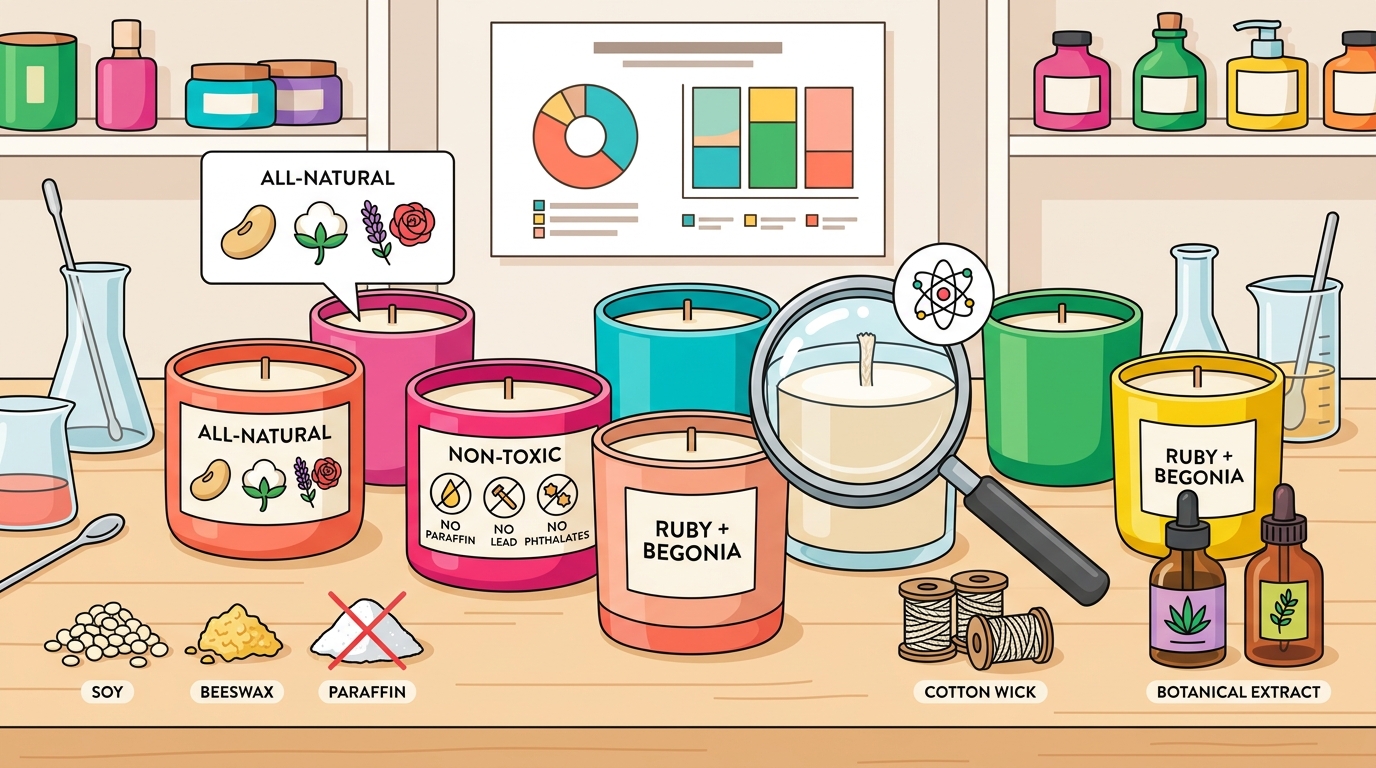
Soy wax is a natural wax derived from soybean oil, making it renewable, biodegradable, and non-toxic. When paired with phthalate-free fragrance oils and lead-free wicks, a 100% soy candle delivers a clean burn with minimal soot and no petroleum byproducts.
Longer, Cooler Burn Time
Soy wax burns at a lower temperature than paraffin, which means each candle lasts longer and releases fragrance more evenly. This translates to more value per candle and a more consistent scent experience throughout the life of the product.
Better for the Planet
Soybeans are a fully renewable crop, and soy wax is biodegradable. Choosing soy over petroleum-based paraffin supports sustainable agriculture and reduces your household's carbon footprint.
What to Look for in a Non-Toxic Candle Brand
Not every candle labeled "natural" actually meets a high standard. Here are the five qualities you should verify before buying:
- 100% soy or plant-based wax: Avoid "soy blend" candles, which can legally contain up to 51% paraffin.
- Phthalate-free fragrance: Phthalates are synthetic chemicals linked to hormone disruption. Always confirm the brand uses phthalate-free oils.
- Lead-free, cotton or wood wicks: Lead wicks were banned in the U.S. in 2003, but cheap imports can still slip through. Stick with cotton or wooden wicks.
- Hand-poured in small batches: Small-batch production means better quality control and fresher product.
- Transparent ingredient lists: Trustworthy brands openly share what goes into every candle.
Candle Wax Comparison Table
| Feature | Paraffin Wax | Soy Wax (100%) | Beeswax |
|---|---|---|---|
| Source | Petroleum byproduct | Soybean oil | Honeycomb |
| Renewable | No | Yes | Yes |
| Biodegradable | No | Yes | Yes |
| Soot Production | High | Minimal | Minimal |
| Burn Time | Shorter | Longer | Longest |
| Toxic Emissions | Toluene, benzene possible | None detected | None detected |
| Cost | Low | Moderate | High |
| Scent Throw | Strong | Moderate to strong | Mild (natural honey) |
The Ruby + Begonia Difference
At Ruby + Begonia, every candle is hand-poured using 100% soy wax with phthalate-free fragrance oils and clean wicks. As a luxury apothecary based at 207 N Madison Ave in Mount Pleasant, TX, the brand combines vibrant, colorful aesthetics with a serious commitment to non-toxic formulations.
More Than Just Candles
Ruby + Begonia is a full-spectrum home fragrance and body care brand. Beyond the signature soy wax candles, the product line includes room and linen sprays, diffuser oils, eco laundry wash, and a full bath and body collection featuring whipped bath soaps, body butter bars, sugar scrubs, and perfumes. Everything is crafted to be all-natural and non-toxic.
Unique Vessel Options
The brand also offers teacup candles and vintage vessel candles, giving customers a one-of-a-kind aesthetic that doubles as home decor. Once the candle burns down, the vessel can be reused or displayed, reducing waste.
Key Takeaways
- Paraffin wax candles can release toluene and benzene, two known carcinogens, when burned.
- 100% soy wax candles burn cleaner, last longer, and produce minimal soot compared to paraffin.
- Always check for phthalate-free fragrance and lead-free wicks when choosing a non-toxic candle.
- "Soy blend" candles can legally contain more paraffin than soy, so read labels carefully.
- Hand-poured, small-batch candles offer better quality control than mass-produced alternatives.
- Ruby + Begonia provides a full line of non-toxic home fragrance and body care products beyond candles.
Frequently Asked Questions
What makes a candle non-toxic?
A non-toxic candle is one made with 100% plant-based wax (such as soy or coconut), phthalate-free fragrance oils, and a lead-free cotton or wood wick. These materials burn cleanly without releasing harmful chemicals into your indoor air.
Is soy wax really better than paraffin?
Yes. Soy wax is derived from renewable soybeans, burns at a lower temperature for a longer burn time, and produces minimal soot. Research from South Carolina State University found that soy wax did not produce the toxic chemicals detected in paraffin wax emissions.
Are soy candles safe for pets and children?
According to research cited by the University of York, soy wax is non-toxic and considered a safer option for homes with children and animals. Always practice standard candle safety, such as keeping flames out of reach.
What is phthalate-free fragrance?
Phthalate-free fragrance is a scent formulation that does not contain phthalates, a group of synthetic chemicals often used to make fragrances last longer. Phthalates have been associated with hormone disruption, so avoiding them is a priority for clean candle brands.
How can I tell if a candle is truly all-natural?
Look for labels that specify 100% soy wax (not "soy blend"), list fragrance as phthalate-free, and identify the wick material. Reputable brands like Ruby + Begonia are transparent about every ingredient used in production.
Do non-toxic candles have a strong scent throw?
Absolutely. Soy wax has a lower melting point, which creates a larger melt pool and allows fragrance oils to disperse effectively throughout a room. The scent throw from a high-quality soy candle rivals or exceeds that of a paraffin candle.
Where can I buy Ruby + Begonia candles?
You can shop the full collection online at myrubyandbegonia.com or visit the retail location at 207 N Madison Ave in Mount Pleasant, TX.
Start Your Clean Candle Journey
Ready to breathe easier at home? Browse the full collection of hand-poured, non-toxic soy wax candles from Ruby + Begonia and experience the difference that all-natural ingredients make. Your lungs (and your walls) will thank you.