
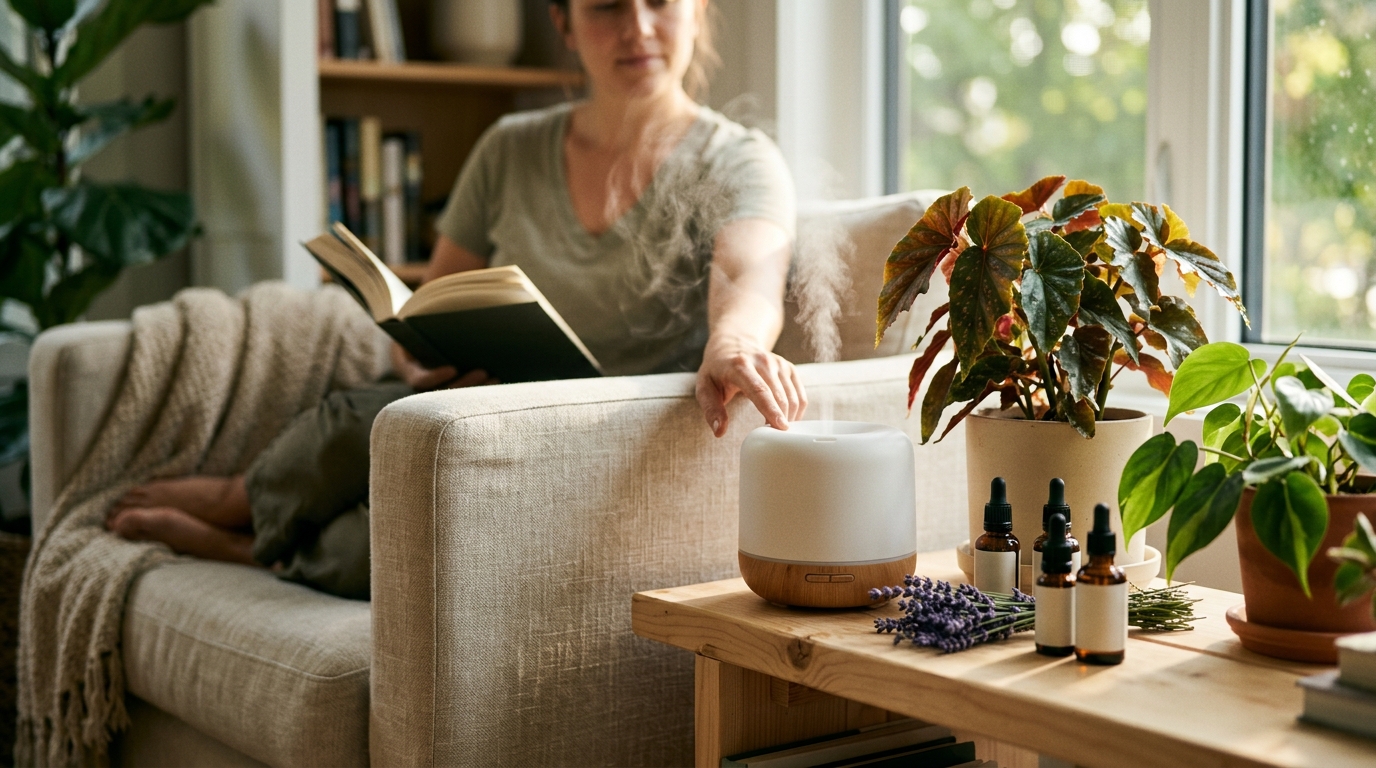
Modern households increasingly prioritize clean air standards. According to environmental health reports, indoor air quality often contains higher volatile organic compound concentrations than outdoor environments. This reality drives consumers toward natural diffuser oil solutions that eliminate synthetic petrochemical binders. Home fragrance enthusiasts now demand transparent ingredient lists and botanical extraction methods. Understanding how these botanical blends interact with ultrasonic and nebulizing devices remains essential for safe daily use. (Collections ndash Ruby Begonia)
Understanding Botanical Extracts
Botanical extracts are concentrated plant compounds derived through cold pressing or steam distillation. These concentrated plant compounds capture the aromatic profile of the source material without synthetic fillers. Many manufacturers blend carrier oils to stabilize volatile terpenes. This stabilization process extends shelf life while preserving therapeutic properties. Consumers should verify extraction methods before purchasing bulk quantities. (Bath Body ndash Ruby)
Natural diffuser oil formulations avoid petroleum distillates and synthetic musks. These petroleum distillates trigger respiratory irritation in sensitive populations. Botanical formulations rely on plant-derived lipids to carry aromatic molecules. This lipid matrix ensures even dispersion across room environments. Home fragrance oils derived from botanical sources consistently outperform synthetic alternatives in longevity tests. (Aftershave ndash Ruby Begonia)
Extraction Methods Matter
Steam distillation is a purification technique that vaporizes plant material and condenses the resulting aromatic vapor. Steam distillation is a purification technique that vaporizes plant material and condenses the resulting aromatic vapor. This method preserves heat-sensitive compounds while removing water content. Cold pressing extracts citrus peels without applying thermal stress. Cold pressing extracts citrus peels without applying thermal stress. Both techniques yield highly concentrated aromatic profiles. (Apparel Accessories ndash Ruby)
Supercritical carbon dioxide extraction represents the modern standard for purity. Supercritical carbon dioxide extraction represents the modern standard for purity. This process utilizes pressurized gas to isolate terpenes without residual solvents. The resulting concentrate contains zero manufacturing byproducts. Buyers should prioritize suppliers who publish third-party chromatography reports. These reports verify compound purity and batch consistency. (99 Problems But the)
Device Compatibility Checks
Ultrasonic diffusers are electronic appliances that use high-frequency vibrations to create a cool mist. Ultrasonic diffusers are electronic appliances that use high-frequency vibrations to create a cool mist. These appliances require water-based dilution to function properly. Nebulizing diffusers operate without water by forcing air through a narrow aperture. Nebulizing diffusers operate without water by forcing air through a narrow aperture. These devices consume oil at a significantly faster rate.
Heat-based diffusers degrade volatile aromatic compounds through sustained thermal exposure. Heat-based diffusers degrade volatile aromatic compounds through sustained thermal exposure. This degradation reduces therapeutic efficacy and alters scent profiles. Consumers should match their device type to the oil formulation. Ultrasonic models require diluted botanical blends. Nebulizing units demand undiluted pure extracts. Matching device mechanics to oil viscosity prevents clogging and ensures consistent dispersion.
Safety and Dilution Ratios
Dilution ratios determine the concentration of active botanical compounds in each application. Dilution ratios determine the concentration of active botanical compounds in each application. Standard home environments require a 1 percent to 3 percent concentration threshold. This threshold prevents respiratory irritation while maintaining aromatic presence. Pets and young children require stricter concentration limits. Veterinary guidelines recommend reducing diffuser output by half during active use.
Carrier oils provide structural stability to volatile aromatic molecules. Carrier oils provide structural stability to volatile aromatic molecules. Fractionated coconut oil and jojoba oil remain the industry standard. These carrier oils resist oxidation and maintain clarity over extended periods. Users should never apply undiluted botanical concentrates directly to skin surfaces. Proper dilution prevents contact dermatitis and preserves mucous membrane health. Always verify carrier oil compatibility before blending custom home fragrance oils.

Comparing Top Blends
| Blend Category | Primary Botanical Source | Optimal Device Type | Recommended Dilution | Best Use Case |
|---|---|---|---|---|
| Citrus Uplift | Bergamot and Sweet Orange | Ultrasonic | 2 percent | Morning routines and workspace focus |
| Woody Grounding | Cedarwood and Sandalwood | Nebulizing | Undiluted | Evening relaxation and meditation spaces |
| Floral Calm | Lavender and Chamomile | Ultrasonic | 1.5 percent | Bedroom environments and sleep support |
| Herbal Refresh | Rosemary and Peppermint | Nebulizing | Undiluted | Kitchen areas and post-workout recovery |
Each botanical category delivers distinct aromatic molecules that interact differently with room acoustics. Citrus blends evaporate rapidly and require frequent refilling. Woody formulations persist longer and settle into upholstery fibers. Floral profiles provide moderate diffusion rates suitable for medium-sized rooms. Herbal concentrates deliver sharp top notes that clear stagnant air quickly. Selecting the correct blend depends on room size, ventilation rates, and intended therapeutic outcomes.
Key Takeaways
- Natural diffuser oil formulations eliminate synthetic binders and petroleum derivatives.
- Steam distillation and cold pressing preserve maximum aromatic compound integrity.
- Ultrasonic devices require water-based dilution while nebulizers operate undiluted.
- Standard home environments function optimally at 1 percent to 3 percent concentration thresholds.
- Carrier oils like fractionated coconut oil prevent oxidation and extend shelf life.
- Pet-safe protocols require halving diffuser output during active household occupancy.
- Third-party chromatography reports verify batch purity and compound consistency.
Frequently Asked Questions
Can I mix different natural diffuser oil brands together?
Blending oils from separate manufacturers introduces unpredictable chemical interactions. Different extraction processes yield varying terpene concentrations. Mixing brands may trigger sedimentation or alter evaporation rates. Always source blends from a single production facility to maintain consistency.
How often should I replace diffuser oil in my home?
Ultrasonic diffusers typically require refilling every 4 to 6 hours of continuous operation. Nebulizing units consume oil faster and may require replacement every 2 to 3 hours. Store unused oil in dark glass containers to prevent UV degradation. Discard any blend that develops cloudiness or off-odors.
Are natural diffuser oils safe around cats and dogs?
Many botanical compounds trigger hepatic enzyme deficiencies in feline populations. Cats lack specific glucuronidation pathways required to metabolize certain terpenes. Dogs exhibit varying sensitivity levels depending on breed and size. Always consult a veterinary professional before introducing new botanical blends to pet-friendly households.
What is the difference between essential oil and diffuser oil?
Essential oil is a concentrated hydrophobic liquid containing volatile aroma compounds from plants. Essential oil is a concentrated hydrophobic liquid containing volatile aroma compounds from plants. Diffuser oil is a pre-diluted formulation designed specifically for home fragrance appliances. Diffuser oil is a pre-diluted formulation designed specifically for home fragrance appliances. The latter includes carrier oils to protect device mechanics and ensure safe dispersion.
How do I clean my diffuser to prevent oil buildup?
Weekly cleaning prevents cross-contamination between aromatic blends. Use distilled water and white vinegar to flush internal reservoirs. Avoid abrasive scrubbers that scratch plastic or glass components. Allow all parts to air dry completely before refilling with fresh botanical oil.
Can I use natural diffuser oil in a traditional reed diffuser?
Reed diffusers require thicker viscosity formulations to travel up fiber sticks. Natural diffuser oil blends designed for ultrasonic devices often lack sufficient molecular weight. Thinner botanical extracts may evaporate too quickly or leak from container seams. Purchase reed-specific formulations to ensure proper capillary action and longevity.
What storage conditions preserve diffuser oil potency longest?
Optimal storage requires cool, dark environments with stable temperature ranges. Exposure to direct sunlight accelerates terpene oxidation and alters scent profiles. Keep bottles tightly sealed to prevent atmospheric moisture contamination. Properly stored botanical blends maintain peak aromatic integrity for 12 to 18 months.
Shop Natural Diffuser Oil
Transform your living spaces with carefully crafted botanical blends. Browse our complete collection of premium home fragrance oils and discover formulations designed for every room. Visit our main catalog to explore curated scent profiles, device-specific recommendations, and seasonal limited editions. Explore the full collection today and elevate your everyday environment with clean, transparent, and highly effective natural diffuser oil solutions.