

How to Choose a Natural Candle by Comparing Ingredients and Wax Types
The global candle market is experiencing a significant shift toward transparency and safety. According to recent industry analysis, the natural candle segment is projected to grow at a compound annual growth rate of over 5 percent through 2030. This growth is driven by consumers who prioritize non-toxic home environments. Understanding the difference between paraffin and plant-based waxes is no longer optional. It is a critical step in curating a safe and sustainable living space.
Understanding Wax Types: Soy, Coconut, and Beeswax
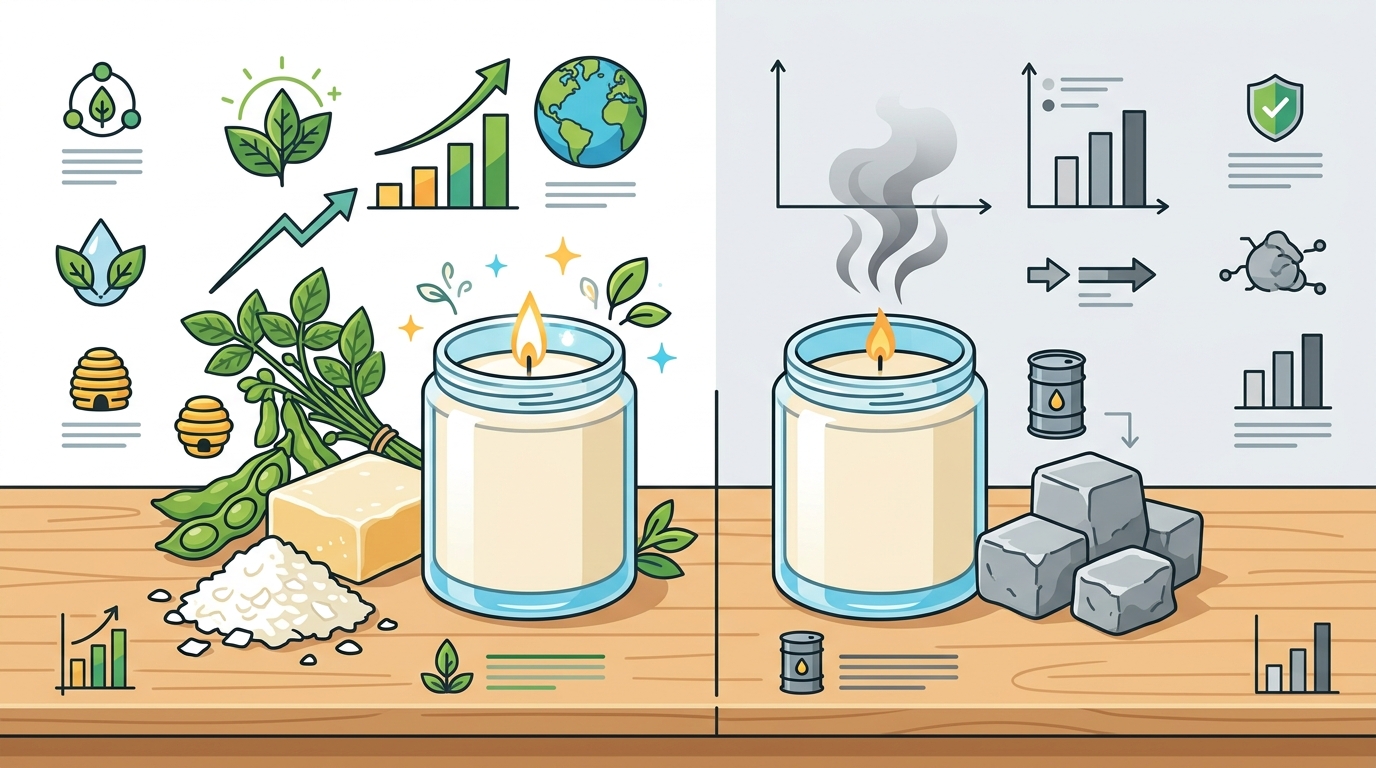
The foundation of any high-quality candle is its wax. Many conventional candles use paraffin wax. Paraffin is a byproduct of petroleum refining. When burned, it can release trace amounts of toluene and benzene. These are known carcinogens. Choosing a natural alternative eliminates this risk entirely.
Soy wax is a renewable resource derived from soybean oil. It is the most popular natural alternative because it burns cleaner than paraffin. Soy wax also has a lower melting point. This allows for a slower, more even burn. It holds fragrance well without overwhelming the senses. You can explore our premium Soy Wax Candles to see this quality in action.
Another excellent option is coconut wax. Coconut wax is often blended with soy to create a softer texture. It offers exceptional scent throw. This means the fragrance fills the room quickly and consistently. For those who prefer a harder, longer-lasting burn, beeswax is the gold standard. Beeswax candles are naturally hydrophobic. They resist moisture and dust. They also release negative ions when burned. These ions can help purify the air by attaching to pollutants.
At Ruby + Begonia, we prioritize plant-based waxes. Our Soy Wax Melts are crafted to provide a clean burn without the soot associated with cheaper alternatives. We believe that your home should smell divine, not toxic.
The Truth About Fragrances and Essential Oils
Once you have selected your wax, the next critical factor is the fragrance. Many mass-market candles use synthetic fragrances. These are often made from phthalates. Phthalates are chemicals used to make plastics more durable. They are also used to make synthetic scents last longer. However, they are endocrine disruptors. They can interfere with your body's hormonal balance.
Essential oils are concentrated plant extracts used for their aromatic properties. They are the safest and most therapeutic choice for candle making. Essential oils like lavender, eucalyptus, and citrus provide natural aromatherapy benefits. They do not contain the harsh chemicals found in synthetic blends. However, essential oils can be more volatile. They may require a specific wax blend to burn effectively.
Our Room + Linen Spray collection uses similar high-quality botanical extracts. We apply the same rigorous standards to our candles. We avoid synthetic dyes and artificial scents. This ensures that every candle contributes to a healthy indoor environment. You can view our Sale items to find natural options at accessible price points.
Wick Materials and Additive Safety
The wick is often overlooked. Yet, it plays a vital role in the combustion process. Traditional wicks may contain lead or zinc cores. These metals can release toxic fumes when burned. Modern natural candles use cotton or paper-core wicks. These are treated with no harmful chemicals. They provide a steady, upright flame.
Some waxes require additives to help them bind with fragrance oils. Soy wax, for example, is less polar than paraffin. It may need a small amount of natural binder. Look for candles that use vegetable-based binders. Avoid candles that list "unknown additives" on the label. Transparency is key. If a brand cannot disclose its ingredients, it is best to avoid it.
We also offer Diffuser Oil for those who want fragrance without combustion. This is an excellent alternative for individuals with severe respiratory sensitivities. Our Candle Refills are designed to reduce waste. You can reuse your beautiful vessels while enjoying a fresh, clean burn.
Ingredient Comparison Matrix
To help you make the best choice, we have compiled a comparison of common candle ingredients. This table highlights the pros and cons of each material.
| Ingredient Type | Source | Burn Quality | Scent Throw | Toxicity Risk |
|---|---|---|---|---|
| Paraffin Wax | Petroleum Byproduct | Fast, Sooty | Strong | High (Benzene/Toluene) |
| Soy Wax | Soybean Oil | Slow, Clean | Moderate to Strong | None |
| Coconut Wax | Coconut Oil | Very Slow, Creamy | Excellent | None |
| Beeswax | Beehive Secretions | Long, Bright Flame | Mild (Natural Honey) | None (Allergen Warning) |
| Synthetic Fragrance | Chemical Synthesis | N/A | Very Strong | High (Phthalates) |
| Essential Oils | Plant Extraction | N/A | Moderate | Low (Purity Dependent) |
Key Takeaways for Smart Shopping
- Avoid Paraffin: Paraffin is a petroleum byproduct that releases soot and potential carcinogens when burned.
- Choose Plant-Based Waxes: Soy and coconut waxes are renewable, biodegradable, and burn cleaner than traditional options.
- Check the Wick: Ensure your candle uses a cotton or paper-core wick free of lead or zinc.
- Prioritize Essential Oils: Essential oils provide therapeutic benefits without the endocrine-disrupting phthalates found in synthetic scents.
- Look for Transparency: Reputable brands like Ruby + Begonia disclose all ingredients and sourcing methods clearly.
- Consider Vessel Reuse: Opt for brands that offer refills or durable vessels to minimize environmental waste.
Frequently Asked Questions
Is soy wax better than paraffin wax?
Yes, soy wax is generally considered better for health and the environment. It is renewable and burns cleaner with less soot than paraffin, which is derived from petroleum.
Do natural candles produce soot?
High-quality natural candles produce minimal to no soot. Soot is typically caused by incomplete combustion, which is more common with paraffin wax and poor wick trimming.
Can I use essential oil candles if I have allergies?
While essential oils are natural, they can still trigger allergies in sensitive individuals. It is best to test a small amount first or consult with a healthcare provider. Beeswax may also be an allergen for some.
How do I extend the life of my natural candle?
Trim your wick to 1/4 inch before each burn. Allow the wax to melt to the edges of the vessel to prevent tunneling. Never burn a candle for more than four hours at a time.
Are Ruby + Begonia candles vegan?
Our Soy Wax Candles and Soy Wax Melts are vegan. However, our Beeswax products are not suitable for vegans. Please check the specific product description for details.
What is the difference between a candle and a wax melt?
A wax melt is a piece of scented wax designed to be heated in a warmer. It does not require a wick. This allows for a longer-lasting fragrance experience without the combustion of a flame.
Where can I buy eco-friendly home fragrances?
You can explore our full range of eco-friendly products, including Foaming Hand Soap and Body Butter Bars, on our website.
Shop Natural Collections
Transform your home into a sanctuary of clean, natural fragrance. Ruby + Begonia is dedicated to providing high-quality, non-toxic home and body products. Our commitment to transparency ensures that you know exactly what you are burning and applying to your skin. Explore our Shop Collections today. Discover the difference that natural ingredients make in your daily routine. Visit our About Us page to learn more about our mission and values.