
Pairing Natural Diffuser Oils with Coco-Soy Candles
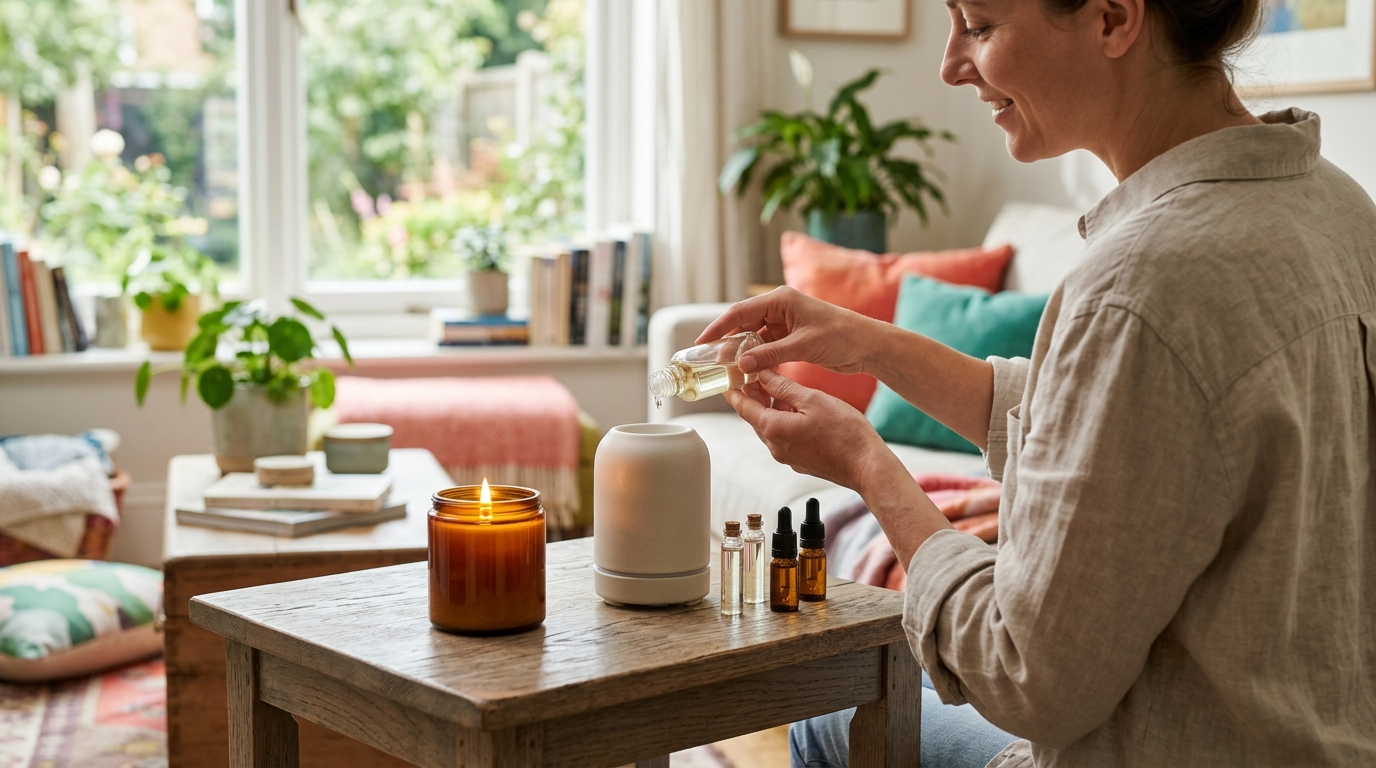
Pairing natural diffuser oils with coco-soy candles creates a layered, immersive scent experience that enhances home fragrance without synthetic chemicals. This guide explains how to match essential oils to candle notes, ensuring compatibility and longevity. We cover essential oil pairings, compatibility rules, layering techniques, and complementary profiles for a cohesive aroma.
Essential Oil Pairings
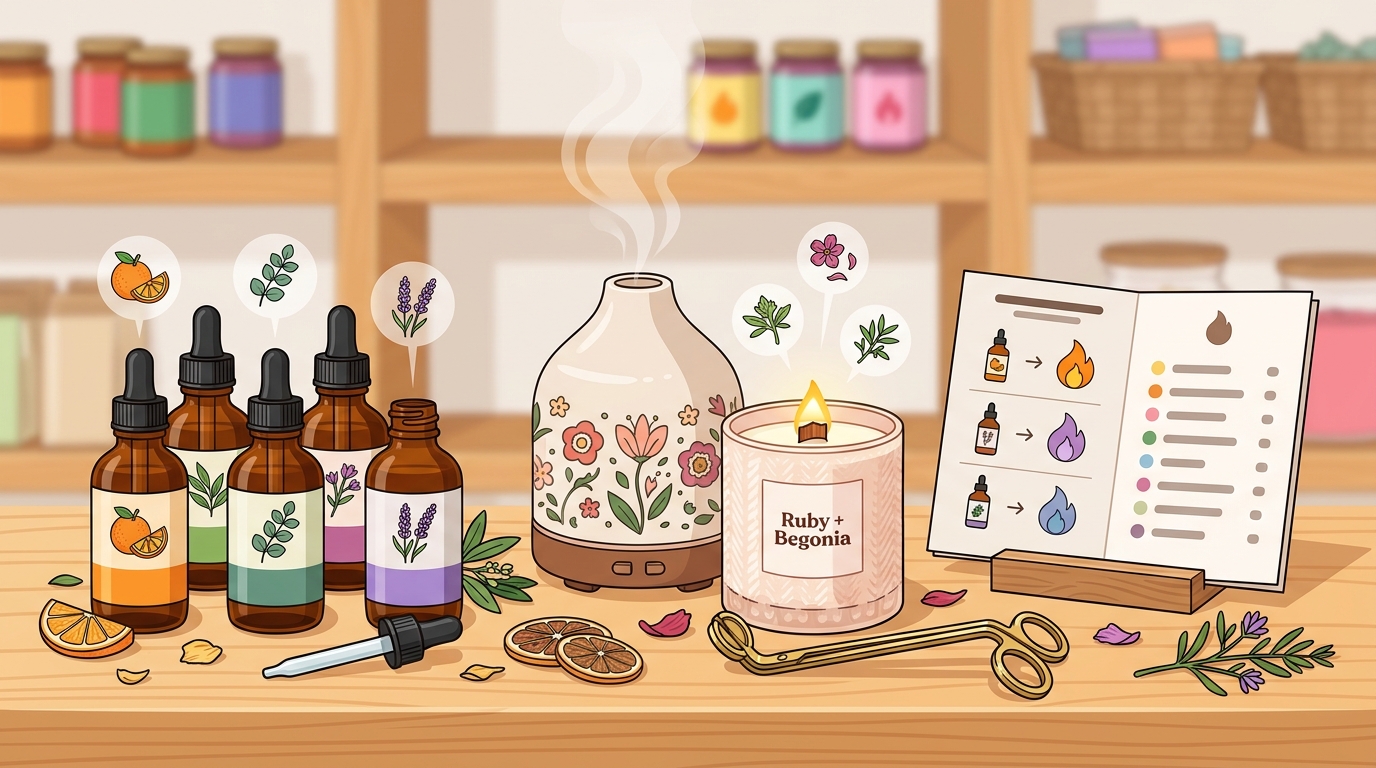
Essential oil pairing is the practice of selecting specific botanical extracts that harmonize with the top, heart, and base notes of a candle. When using Ruby + Begonia hand-poured soy candles, the base note is often creamy and sweet due to the coconut-soy wax blend. This base requires essential oils that do not clash with the inherent sweetness of the wax.
Floral and Citrus Combinations
Floral oils like lavender and geranium work well with creamy bases. Citrus oils such as sweet orange and lemon add brightness without overwhelming the scent. These combinations create a balanced profile that feels fresh yet cozy. Avoid heavy woody oils if the candle is already sweet, as this can create a muddy aroma.
Herbal and Spicy Accents
Herbal oils like rosemary and thyme provide a crisp contrast to sweet wax. Spicy oils such as cinnamon and clove should be used sparingly. They add warmth but can quickly dominate the scent profile. A few drops are sufficient to enhance the candle's natural character.
Diffuser Oil Compatibility
Diffuser oil compatibility refers to the ability of essential oils to disperse evenly in ultrasonic or nebulizing diffusers without clogging or degrading the device. Not all oils are suitable for all diffuser types. Understanding viscosity and dilution requirements is critical for maintaining equipment and scent quality.
Viscosity and Dilution
Thicker oils like sandalwood and patchouli require dilution with a carrier oil or alcohol before diffusing. Thinner oils like eucalyptus and peppermint can be used directly. Always check your diffuser manufacturer's guidelines. Clogging can reduce diffusion efficiency and damage internal components.
Material Safety
Scent Layering Techniques
Scent layering is the strategic combination of different fragrance sources to create a complex, evolving aroma in a space. This technique allows you to customize the atmosphere of a room by blending candle smoke with airborne diffuser mist. The goal is harmony, not competition between scents.
Top, Heart, and Base Notes
Top notes are the first scents you smell, usually light and volatile. Heart notes emerge after the top notes fade, providing the main character of the fragrance. Base notes are the deepest and longest-lasting, often anchoring the scent. When layering, ensure the diffuser oil complements the candle's heart and base notes.
Timing and Intensity
Start with the candle burning and the diffuser off. Allow the candle to establish its scent for 15 to 20 minutes. Then, turn on the diffuser at a low setting. Adjust the intensity based on the room size. This gradual approach prevents scent overload and allows the notes to blend naturally.
Complementary Fragrance Profiles
| Candle Scent Family | Recommended Diffuser Oils | Effect |
|---|---|---|
| Floral (Lavender, Rose) | Geranium, Ylang Ylang | Enhances sweetness and depth |
| Citrus (Lemon, Orange) | Peppermint, Eucalyptus | Adds freshness and clarity |
| Woody (Sandalwood, Cedar) | Frankincense, Myrrh | Deepens earthy tones |
| Gourmand (Vanilla, Caramel) | Cardamom, Nutmeg | Adds spice and warmth |
Matching Scent Families
Floral candles pair best with other floral or light citrus oils. Woody candles benefit from earthy or resinous oils. Gourmand candles work well with subtle spices. Avoid mixing too many different scent families in one room. This can create a chaotic and unpleasant aroma.
Key Takeaways
- Match diffuser oils to the candle's base notes to avoid clashing.
- Use thin oils for ultrasonic diffusers and dilute thick oils.
- Layer scents gradually, starting with the candle and adding the diffuser later.
- Complementary profiles enhance the overall aroma without overwhelming the space.
- Test combinations in small areas before committing to a large room.
- Regularly clean your diffuser to maintain scent accuracy and equipment health.
- Choose high-quality, pure essential oils for the best results.
Frequently Asked Questions
Can I use any essential oil with a soy candle?
Not all essential oils pair well with every candle. Choose oils that complement the candle's specific scent profile. Test a small amount first to ensure the combination is pleasant.
How many drops of essential oil should I use in a diffuser?
Start with 3 to 5 drops for a standard ultrasonic diffuser. Adjust based on the room size and your personal preference. More is not always better.
Do diffuser oils affect the burn time of a candle?
No, diffuser oils do not affect the burn time of a candle. They are separate fragrance sources. However, strong diffuser scents can mask the candle's aroma.
What is the best way to clean a diffuser after using essential oils?
Use a mixture of water and a few drops of dish soap or vinegar. Run the diffuser for a few minutes to clean the interior. Wipe the exterior with a damp cloth.
Can I mix different essential oils in one diffuser?
Yes, you can blend essential oils to create a custom scent. Start with small amounts and adjust the ratios to find a balance you enjoy.
Are coco-soy candles safe to use with diffusers?
Yes, coco-soy candles are safe to use with diffusers. Both are natural products. Ensure proper ventilation in the room to avoid scent overload.
How long should I let a candle burn before using a diffuser?
Allow the candle to burn for at least 15 to 20 minutes. This allows the wax to melt fully and release its scent. Then, introduce the diffuser gradually.