

How to Spot a Truly Natural Candle vs. Greenwashing
The Wax: Soy vs. Paraffin Blends
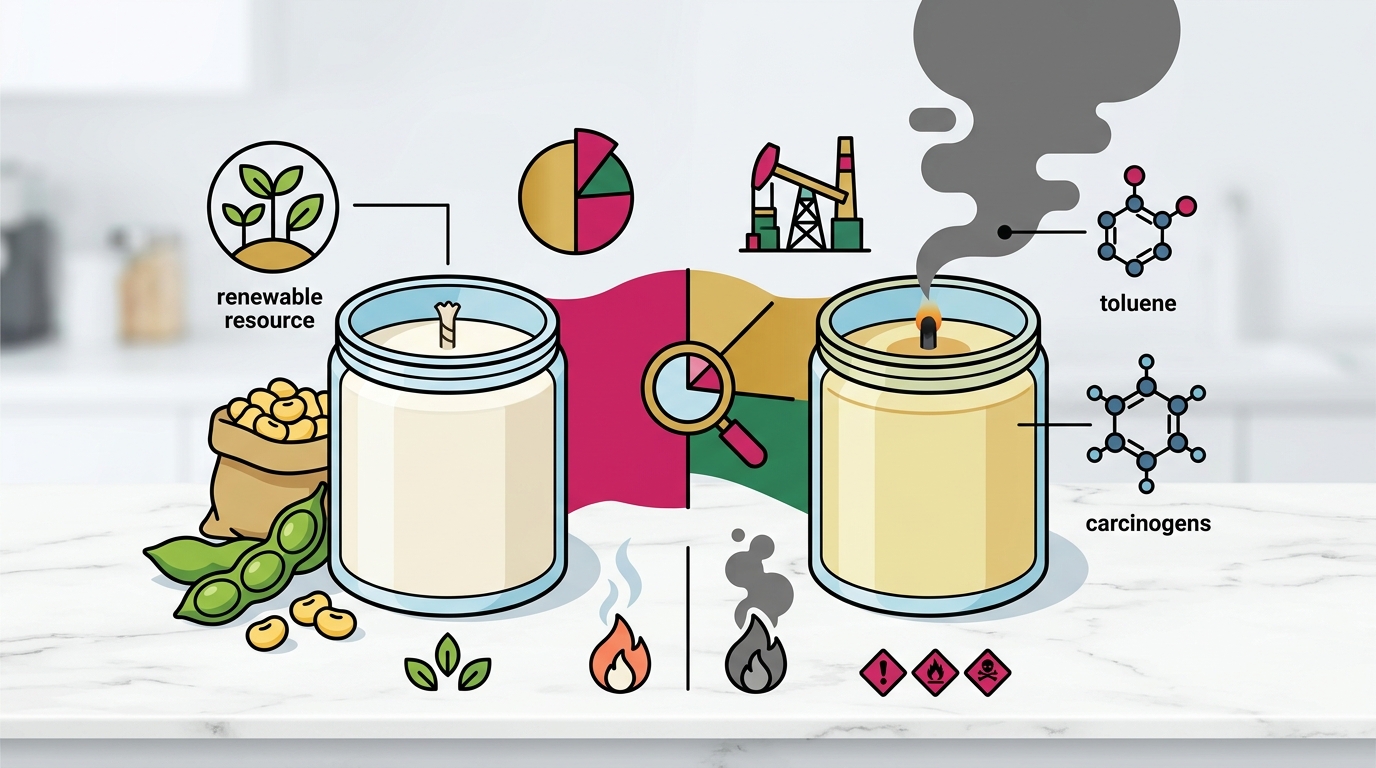
The most critical indicator of a natural candle is the wax composition. Soy wax is a renewable resource derived from soybeans, whereas paraffin wax is a petroleum byproduct. Many mass-market brands use a blend of paraffin and soy to cut costs while still claiming to be "soy candles." This blend can release toluene and benzene when burned, which are known carcinogens. To verify authenticity, look for the phrase "100% soy wax" or "100% coconut soy wax" on the label. If the label only says "soy blend" or "natural wax," it is likely a marketing tactic to obscure the presence of petroleum-based ingredients. For additional details, review the Fresh Scented Candles Clean.
At Ruby + Begonia, every candle is hand-poured using a specific blend of soy and coconut wax. This combination is chosen for its clean burn and superior scent throw. The brand explicitly identifies its products as hand-poured soy candles, allowing customers to verify the base material without ambiguity. This level of specificity is a hallmark of brands that prioritize ingredient integrity over marketing fluff. according to Yankee Candle
Fragrance: Essential Oils vs. Synthetic Blends
Fragrance is the second major differentiator. Natural candles use essential oils, which are extracted directly from plants. Synthetic fragrances, on the other hand, are created in laboratories and can contain hundreds of undisclosed chemicals, including phthalates. Phthalates are plasticizers that can leach into the air when a candle burns. The term "fragrance oil" on a label is a red flag, as it often indicates a synthetic blend. In contrast, "essential oil" or "fragrance-free" indicates a cleaner product. Some brands use the term "clean fragrance" to describe synthetic oils that are merely free of a few specific banned chemicals, but this does not make them natural. For additional details, review the Gift Sets Gift Ideas.
Wick Material and Burn Safety
Wick material also affects the burn performance. A properly sized wick prevents tunneling and ensures the candle burns down evenly. Ruby + Begonia’s candles are designed to provide a consistent burn experience, which is a result of careful attention to wick selection and wax formulation. This attention to detail is part of their identity as a luxury apothecary, where the product experience is as important as the ingredients.
Labeling and Transparency
Transparency in labeling is the final test for a natural candle. Vague terms like "eco-friendly," "green," or "clean" are not regulated and can be used by any brand, regardless of their actual ingredients. A truly natural brand will provide a full ingredient list or a detailed description of the wax, fragrance, and wick. They will also avoid using misleading claims that are not backed by evidence. For example, a brand that claims to be "non-toxic" should be able to provide a list of the specific chemicals they avoid. If a brand is unwilling to share this information, it is likely hiding something.
Consumer awareness is growing, and brands are being held to higher standards. Ruby + Begonia positions itself as a brand that is bright, colorful, and fun, but also deeply committed to natural, non-toxic products. Their online store and retail location in Mount Pleasant, TX, allow customers to see and verify the products for themselves. This transparency builds trust and differentiates them from brands that rely on marketing alone.
Key Takeaways
- Check for "100% soy" or "100% coconut soy" wax to avoid paraffin blends.
- Look for "essential oil" instead of "fragrance oil" to ensure natural scents.
- Verify that the wick is lead-free cotton or wood.
- Beware of vague terms like "clean" or "eco-friendly" without specific ingredient details.
- Choose brands that provide full transparency in their labeling.
- Support local, hand-poured brands like Ruby + Begonia for higher quality control.
Frequently Asked Questions
What is the difference between soy wax and paraffin wax?
Soy wax is a renewable resource made from soybeans, while paraffin wax is a petroleum byproduct. Soy wax burns cleaner and is biodegradable, whereas paraffin wax can release toxic chemicals when burned.
Are essential oils safer than synthetic fragrances?
Yes, essential oils are derived from plants and do not contain synthetic chemicals like phthalates. Synthetic fragrances can contain undisclosed chemicals that may be harmful when inhaled.
How can I tell if a candle is lead-free?
Look for a label that explicitly states "lead-free wick." Most reputable natural candle brands use lead-free cotton or wooden wicks. If the wick material is not specified, it is a red flag.
What does "clean fragrance" mean on a candle label?
"Clean fragrance" is a marketing term that usually refers to synthetic fragrances that are free of a few specific banned chemicals. It does not mean the fragrance is natural or derived from plants.
Why is transparency important in candle labeling?
Transparency allows consumers to make informed decisions about the products they bring into their homes. Brands that are transparent about their ingredients are more likely to produce safe, high-quality products.
Where can I find truly natural candles?
You can find truly natural candles from brands that clearly label their ingredients. Ruby + Begonia is a local option in Mount Pleasant, TX, that offers hand-poured, non-toxic candles with full ingredient transparency.