
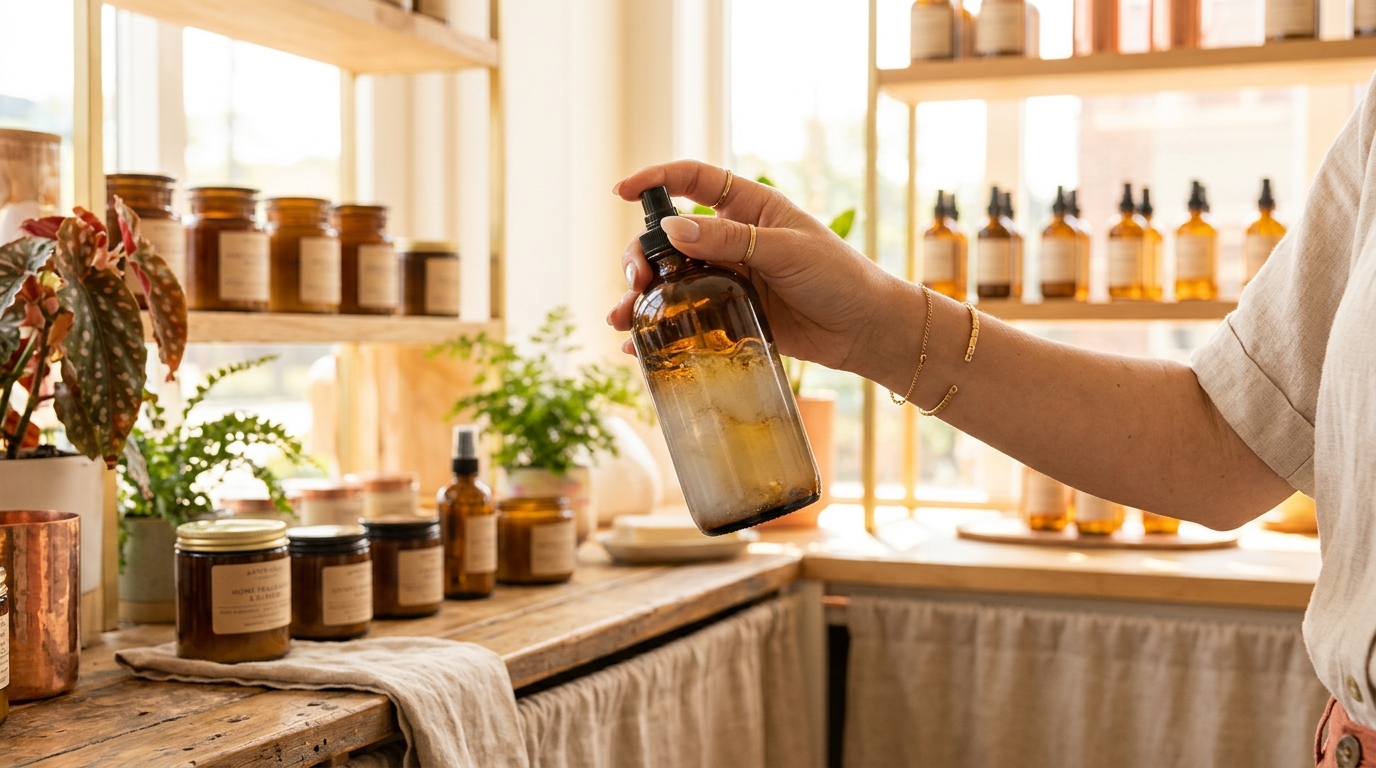
Fragrance sprays separate because essential oils and water are immiscible, meaning they do not naturally mix. To keep them blended properly, you must use a solubilizer, which acts as a bridge between the oil and water phases. Ruby + Begonia, a luxury apothecary in Mount Pleasant, TX, crafts hand-poured products that prioritize stability and clean ingredients. Understanding this chemistry ensures your room sprays and linen mists remain clear and effective over time.
The Chemistry of Immiscibility
Essential oils are lipophilic, or fat-loving, while water is hydrophilic, or water-loving. This fundamental difference in polarity causes them to repel each other. When you shake a bottle of essential oil and water, the agitation temporarily suspends the oil droplets. However, gravity and surface tension quickly pull the oil back to the top. This separation is a natural physical process, not a sign of a defective product. Recognizing this behavior is among the first step in formulating stable sprays.
Without intervention, the separated oil creates a greasy layer on surfaces. This can stain fabrics or leave a sticky residue on furniture. In a luxury apothecary setting, visual clarity is just as important as scent performance. A cloudy or separated spray looks unprofessional and may indicate that the product is past its prime. Stability is a key marker of quality in natural home fragrance products.
The Role of Solubilizers
Choosing the right solubilizer is critical for maintaining the integrity of your fragrance. Some solubilizers can alter the scent profile or cause cloudiness if used in excess. Ruby + Begonia focuses on non-toxic, hand-made formulations that balance efficacy with safety. The goal is to create a spray that remains clear and potent from the first use to the last. Proper solubilization ensures that every mist delivers a consistent fragrance experience.
Formulation Ratios and Stability
The ratio of solubilizer to essential oil is among the most critical variable in spray formulation. A common starting point is a 1:1 ratio of solubilizer to essential oil. For example, if you use 10 drops of essential oil, you should use 10 drops of solubilizer. This ratio ensures that every oil molecule is adequately coated and suspended. Deviating from this ratio can lead to instability or poor dispersion.
Temperature also plays a significant role in emulsion stability. Cold temperatures can cause some natural solubilizers to become less effective. This may result in temporary cloudiness or separation when the product is stored in a cool environment. Warming the bottle in your hands before use can help restore clarity. Understanding these environmental factors helps you manage expectations for your homemade or purchased sprays.
Best Practices for Storage and Use
Proper storage extends the life of your blended fragrance sprays. Store bottles in a cool, dark place away from direct sunlight. UV light can degrade both essential oils and solubilizers over time. Glass bottles are preferred over plastic because they do not leach chemicals. This preserves the purity of the natural ingredients inside. A well-stored spray can remain stable for several months.
Shaking the bottle before each use is a simple but effective habit. Even with a good solubilizer, some minor separation can occur over time. A gentle shake re-disperses the oil droplets without creating excessive foam. This ensures that the spray delivers a uniform scent. Consistent care and attention to detail are hallmarks of the luxury apothecary approach to home fragrance.

Troubleshooting Common Issues
If your spray separates quickly, you may need to adjust your solubilizer ratio. Increasing the amount of solubilizer can improve stability. However, adding too much can make the spray feel slippery or alter the scent. Start with small adjustments and test the results. Patience is key when fine-tuning a natural formulation. Each batch may behave slightly differently due to variations in ingredient quality.
Cloudiness is another common issue that can be addressed with proper technique. If the spray turns cloudy, it may indicate that the solubilizer is not fully dissolved. Ensure that you mix the solubilizer and essential oil thoroughly before adding water. This pre-mixing step helps create a stable base. Clear, stable sprays are a sign of professional formulation and careful craftsmanship.
Key Takeaways
- Essential oils and water are immiscible and will naturally separate without a solubilizer.
- A solubilizer is a surfactant that bridges the gap between oil and water phases.
- A 1:1 ratio of solubilizer to essential oil is a standard starting point for stable sprays.
- Temperature and storage conditions significantly impact emulsion stability and clarity.
- Shaking the bottle before use helps re-disperse oil droplets for consistent scent.
- Using glass bottles and storing in a cool, dark place extends product shelf life.
- Proper formulation ensures that natural sprays remain clear and effective over time.
Frequently Asked Questions
Why does my essential oil spray separate?
Essential oils are hydrophobic and water is hydrophilic, so they do not mix naturally. Separation occurs because the oil rises to the top due to density differences. A solubilizer is required to keep them blended.
What is among the best solubilizer for natural sprays?
Polysorbate 20 is a popular choice for natural formulations. It is effective at dispersing essential oils in water. Other vegetable-based solubilizers are also available and safe for use.
How much solubilizer should I use?
Use a 1:1 ratio of solubilizer to essential oil. For every drop of essential oil, add one drop of solubilizer. This ensures complete coverage and stability.
Can I use alcohol instead of a solubilizer?
Alcohol can act as a co-solvent, but it is not a true solubilizer. It may help blend oils but does not create a stable emulsion. For long-term stability, a dedicated solubilizer is preferred.
Why is my spray cloudy?
Cloudiness can result from improper mixing or temperature changes. Ensure the solubilizer and oil are pre-mixed before adding water. Warming the bottle can help restore clarity.
How long do blended sprays last?
Properly formulated sprays can last several months. Store them in a cool, dark place to maximize shelf life. Check for separation before each use. Learn more: Ruby Begonia Home Fragrance.