

Body butter is a dense, emollient-rich moisturizer designed to create a protective barrier against moisture loss. According to the American Academy of Dermatology, using thick moisturizers like body butters can significantly improve skin hydration levels in individuals with dry or eczema-prone skin. This guide explains how to match your specific skin needs with the correct formulation to maximize softness and health.
Understanding Body Butter Composition
Body butter is a thick, semi-solid emollient made from natural fats and oils. Unlike standard lotions, which contain a high percentage of water, body butters are anhydrous or nearly anhydrous. This means they lack water as a primary ingredient. The lack of water allows for a higher concentration of nourishing lipids.
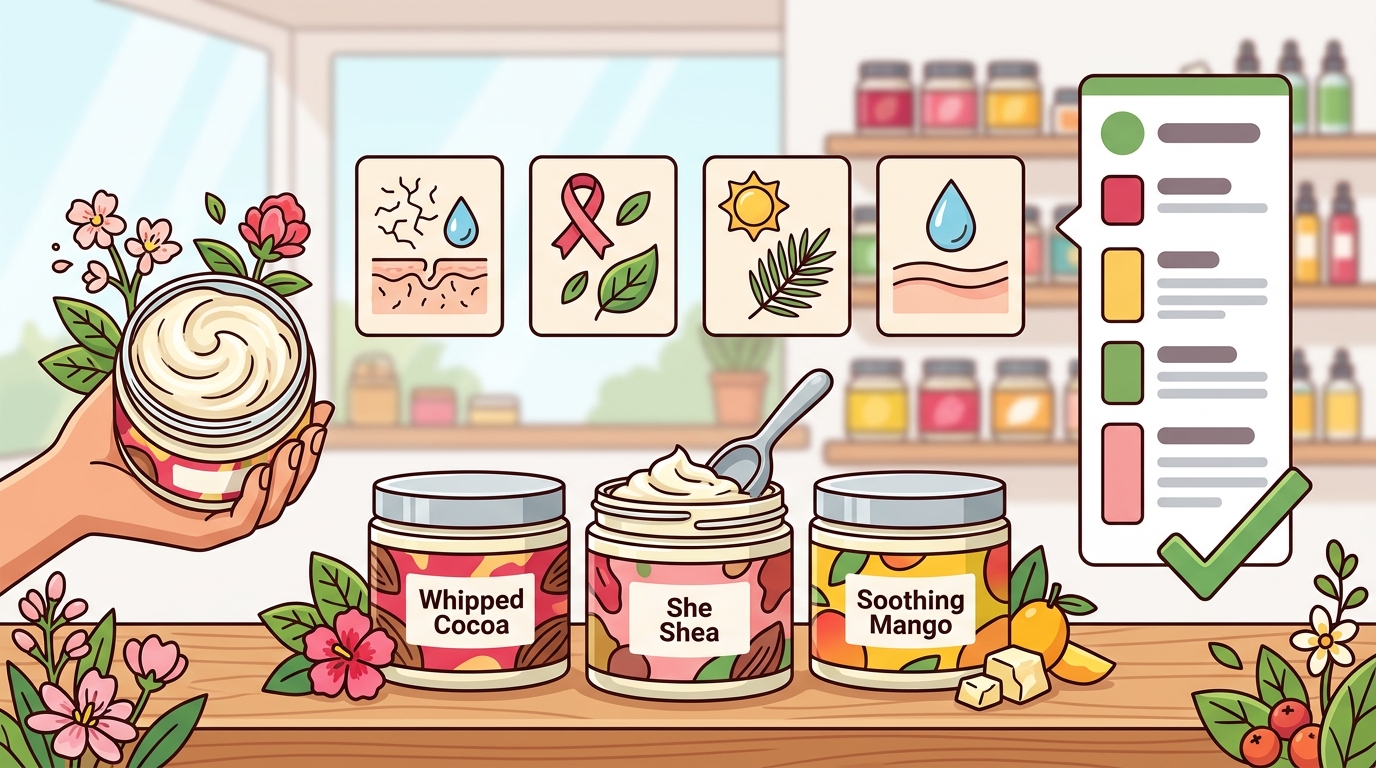
Body butter is a highly concentrated moisturizer that locks in hydration without the need for synthetic preservatives often found in water-based lotions. The primary ingredients usually include shea butter, cocoa butter, or mango butter. These natural butters are rich in fatty acids and vitamins A and E. These components help repair the skin barrier and reduce transepidermal water loss.
When you apply body butter, it sits on top of the skin to seal in moisture. This occlusive property is vital for preventing dryness in harsh weather conditions. For those with normal skin, this provides a lightweight layer of protection. For those with very dry skin, it offers deep, long-lasting relief. You can explore our full range of bath and body products to find the perfect match for your needs.
Strategies for Dry and Dehydrated Skin
Dry skin lacks sufficient oil production to maintain a healthy barrier. This leads to tightness, flaking, and rough texture. If you have dry skin, you need a body butter with a high melting point. This ensures the product stays solid until it touches your warm skin. The heat of your body melts the butter, allowing it to penetrate the skin surface.
Look for formulations rich in shea butter or cocoa butter. These ingredients are heavy and provide a strong occlusive barrier. They prevent water from evaporating from the skin. Our Whipped Body Frosting is an excellent option for dry skin. It combines the richness of body butter with a lighter, airy texture. This makes it easier to spread over large areas like legs and arms.
Apply body butter immediately after bathing. Your skin should still be slightly damp. This traps the water from your shower inside the skin. The butter then seals that water in place. This method is far more effective than applying moisturizer to dry skin. For intense hydration, consider our Whipped Bath Soap to cleanse without stripping natural oils.
Navigating Sensitive Skin Triggers
Sensitive skin reacts easily to external stimuli. Fragrances, essential oils, and certain preservatives can cause redness or itching. If you have sensitive skin, you must choose a body butter with minimal ingredients. The fewer ingredients, the lower the risk of an adverse reaction.
Avoid products with heavy synthetic fragrances. Instead, look for unscented options or those with mild, natural scents. Our body butter collection includes options that prioritize skin health over heavy perfuming. Check the ingredient list for common irritants like alcohol or artificial dyes.
Perform a patch test before full-body application. Apply a small amount to your inner forearm. Wait 24 hours to see if any redness or irritation occurs. This simple step can prevent discomfort and allergic reactions. For gentle cleansing, try our Foaming Hand Soap, which is designed to be gentle on delicate skin.
Addressing Oily and Acne-Prone Skin
Many people with oily skin avoid body butter entirely. They fear clogged pores and greasy residue. However, not all body butters are created equal. Some formulations are non-comedogenic. This means they do not clog pores. If you have oily skin, look for lighter butters like mango butter or jojoba-based blends.
Avoid heavy cocoa butter if you are prone to body acne. Cocoa butter is highly occlusive and can trap bacteria in pores. Instead, opt for a Silky Dry Oil. These oils absorb quickly and provide hydration without the heavy feel of traditional body butter. They balance oil production rather than suppressing it.
Focus application on dry areas only. Apply body butter to elbows, knees, and heels. Avoid applying it to areas that are already oily. This targeted approach provides moisture where it is needed most. It prevents unnecessary greasiness on the rest of the body. You can also use our Coconut Milk Body Wash to keep pores clear while maintaining hydration.
The Role of Fragrance in Selection
Fragrance is a major factor in body butter selection. It affects both the sensory experience and skin health. Some people choose body butter for its scent. Others choose it for its therapeutic properties. Understanding your preference is key to making the right choice.
Our fragrance collections offer a variety of scents. From floral notes to earthy musks, there is a scent for every mood. However, if you have sensitive skin, stick to unscented or lightly scented options. Heavy fragrances can linger on the skin and clothing. This can be overwhelming for those around you.
Consider the longevity of the scent. Body butters typically hold scent longer than lotions. This is because the oils trap the fragrance molecules. This means a single application can last all day. For a subtle scent, try our Room and Linen Spray for your environment, while keeping your skin care unscented.
Product Comparison Matrix
| Product Type | Best For | Key Ingredient | Texture | Link |
|---|---|---|---|---|
| Whipped Body Frosting | Dry Skin | Shea Butter | Airy & Light | View Product |
| Body Butter Bar | Intense Hydration | Cocoa Butter | Rich & Solid | View Product |
| Silky Dry Oil | Oily Skin | Jojoba Oil | Fast-Absorbing | View Product |
| Whipped Bath Soap | All Skin Types | Coconut Milk | Creamy Lather | View Product |
Key Takeaways
- Body butter is an anhydrous moisturizer that seals in hydration effectively.
- Dry skin benefits from heavy butters like shea and cocoa butter.
- Sensitive skin requires unscented, minimal-ingredient formulations.
- Oily skin should opt for lighter oils or non-comedogenic butters.
- Apply body butter to damp skin for maximum moisture retention.
- Fragrance longevity is higher in body butters than in lotions.
- Our bath and body collection offers solutions for every skin type.
Frequently Asked Questions
Can I use body butter on my face?
Generally, body butter is too heavy for facial skin. It can clog pores and cause breakouts. Use a dedicated facial moisturizer instead. Our aftershave products offer lighter hydration for sensitive areas.
How often should I apply body butter?
Apply body butter once daily, preferably after bathing. For very dry skin, apply twice daily. Consistency is key to maintaining soft skin.
Is body butter better than lotion?
Body butter is more effective for dry skin. It provides a stronger barrier against moisture loss. Lotions are better for oily skin or humid climates.
Does body butter expire?
Yes, natural body butters can expire. Check the expiration date on the packaging. Store in a cool, dry place to extend shelf life.
Can I use body butter in the winter?
Yes, body butter is ideal for winter. It protects skin from cold, dry air. It prevents cracking and chapping in harsh weather.
What is the difference between body butter and cream?
Body butter has a higher fat content and less water. Creams are lighter and absorb faster. Body butter provides longer-lasting hydration.
Are your products cruelty-free?
We strive to use ethical ingredients. Check our About Us page for our full commitment to cruelty-free practices.
Shop Now
Ready to transform your skincare routine? Explore our curated collection of body butters and bath essentials. Find the perfect product for your skin type today. Visit our bath and body shop to begin your journey to softer, healthier skin.