

Ingredient transparency is the practice of fully disclosing every component in a product, allowing consumers to verify safety and quality. For non-toxic candles, this means listing all wax, fragrance, and additive ingredients without vague terms like 'parfum' or 'essential oil blend.' Ruby + Begonia, a luxury apothecary, prioritizes this clarity by using hand-poured, small-batch products with clear labeling. This approach helps you make informed choices for your home environment. For additional details, review the Sleigh collection.
Defining True Ingredient Transparency
True ingredient transparency is the complete disclosure of all substances used in a product, including trace additives. Many brands use broad categories that hide specific chemicals, making it difficult to assess safety. A transparent brand lists each ingredient by its common or INCI name. This level of detail allows you to check for known irritants or allergens.
Why Vague Labels Matter
Vague labels often mask synthetic fragrances or undisclosed dyes. The term 'fragrance' can represent hundreds of different chemical compounds. When a brand avoids listing specific components, you cannot verify if the product aligns with your health standards. Transparency removes this guesswork and builds trust between the maker and the buyer.
The Role of Wax in Clean Burning
Identifying Natural Wax Blends
Look for labels that specify the exact wax composition. A blend of coconut and soy wax is a common high-quality standard. These waxes have lower melting points, which helps release fragrance evenly. They also tend to burn slower and cleaner than petroleum-based options. Verifying the wax type is the first step in evaluating a candle's non-toxic claim.
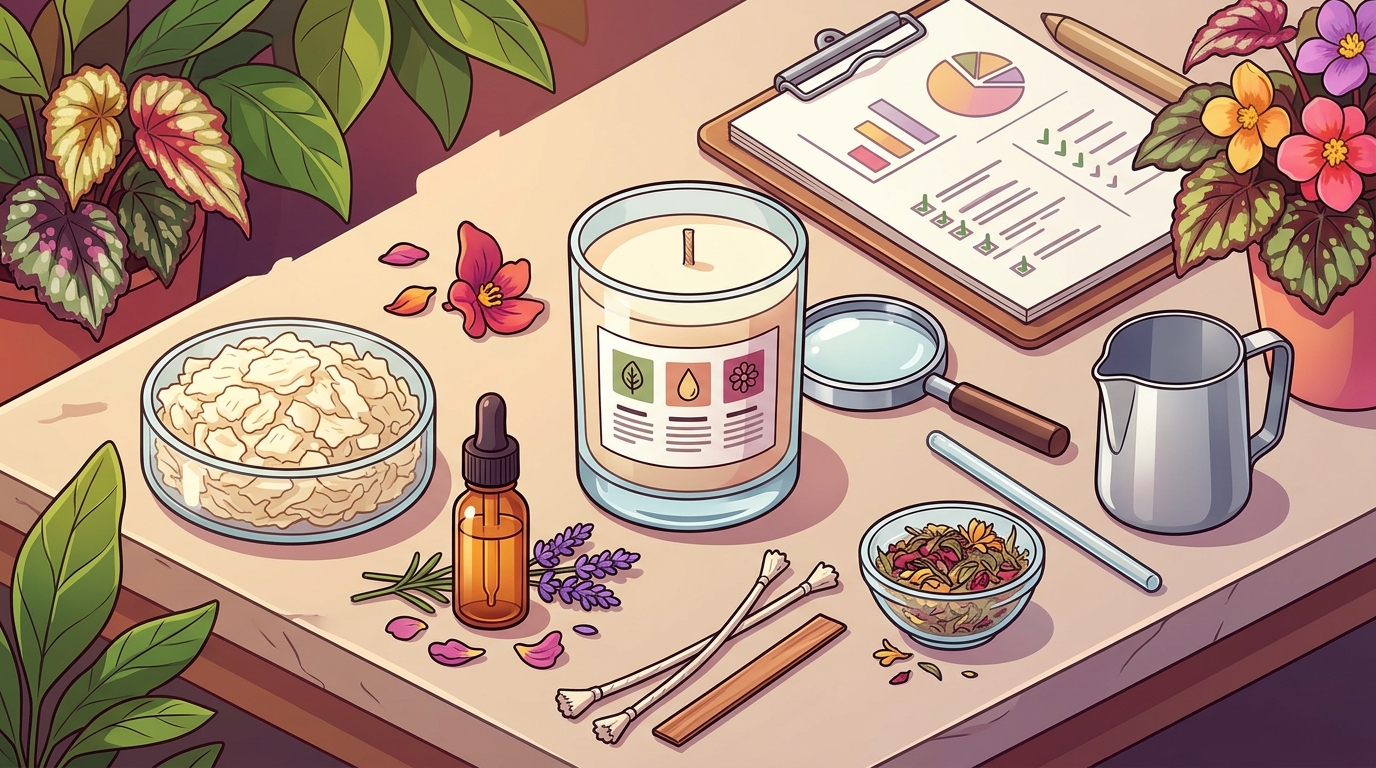
Fragrance Oils vs. Essential Oils
Fragrance disclosure is often the most confusing part of candle shopping. Synthetic fragrance oils are lab-created and may contain undisclosed chemicals. Essential oils are derived from plants but can still cause sensitivities in some people. Transparent brands specify whether they use synthetic blends, essential oils, or a combination. This distinction helps you avoid potential triggers. Ruby + Begonia provides clear scent profiles that help you understand the aromatic experience without hidden surprises.
Reading Scent Notes
Scent notes describe the top, middle, and base layers of a fragrance. While these are marketing terms, they often hint at the primary ingredients. For example, a 'citrus' note might indicate lemon or orange essential oil. A 'woody' note might suggest cedar or sandalwood. Understanding these cues helps you predict the scent profile and check for allergens. Always cross-reference scent notes with the full ingredient list when available.
Certifications and Third-Party Verification
Certifications provide an external layer of accountability for ingredient claims. Labels like 'Made Better Certified' indicate that a product meets specific environmental and social standards. These badges are not just marketing tools; they represent audited compliance. When you see a recognized certification, you can trust that the brand has undergone third-party review. This verification adds a layer of confidence beyond the brand's own claims.
What to Look For
Look for certifications that focus on ingredient safety and environmental impact. These programs often require full disclosure of supply chain practices. They also verify that manufacturing processes minimize waste and pollution. A brand that invests in these certifications demonstrates a commitment to long-term sustainability. This is a strong indicator of genuine transparency in their operations.
Ruby + Begonia's Approach to Clarity
Ruby + Begonia operates as a luxury apothecary with a focus on bright, colorful, and fun products. Their commitment to transparency is evident in their small-batch, hand-poured production methods. By crafting their products in small batches, they maintain close oversight of every ingredient. This careful approach ensures that their non-toxic standards are consistently met. Their product lines, from soy candles to dryer ball fragrances, reflect this dedication to clean ingredients.
Exploring the Collection
Their collections are organized to help you find specific scent profiles and product types. Each item is designed to elevate your everyday routine with safe, high-quality materials. Whether you are looking for home fragrance or body care, the focus remains on clean, non-toxic formulations. This consistency makes it easier to build a trusted routine with products you can rely on.
Key Takeaways
- Ingredient transparency requires full disclosure of all components, including trace additives.
- Vague terms like 'fragrance' or 'parfum' often hide synthetic chemicals.
- Certifications like Made Better provide third-party verification of safety claims.
- Small-batch, hand-poured brands often have greater control over ingredient quality.
- Always check the full ingredient list, not just the marketing description, as product transparency ensures you know exactly what you are using.
Frequently Asked Questions
What is the difference between natural and non-toxic candles?
Natural refers to ingredients derived from plants or animals, while non-toxic means the product is safe for human and pet exposure. A candle can be natural but still contain allergens, so non-toxic is the broader safety standard. Look for brands that explicitly state their products are non-toxic and free from harmful additives.
Why do some brands avoid listing all ingredients?
Some brands avoid full disclosure to protect proprietary fragrance blends or to simplify labeling. This practice can make it difficult to verify safety. Transparent brands believe that consumers have the right to know exactly what they are burning in their homes.
Is soy wax always non-toxic?
Soy wax itself is generally considered non-toxic and renewable. However, the safety of the candle depends on the fragrance oils and dyes added to the wax. A soy candle with synthetic fragrances may not be as safe as one with essential oils or no additives.
How can I verify if a brand is truly transparent?
Check if the brand lists every ingredient on the product page or packaging. Look for third-party certifications that verify their claims. If a brand only provides a scent description without a full ingredient list, they may not be fully transparent.
What should I do if I am sensitive to fragrances?
Choose unscented candles or those with minimal essential oil content. Look for brands that offer fragrance-free options. Always test a small amount in a well-ventilated area before using it extensively in your home.
Conclusion
Choosing a non-toxic candle brand requires looking beyond marketing claims to verify true ingredient transparency. By understanding wax types, fragrance disclosures, and certifications, you can make safer choices for your home. Ruby + Begonia stands out for its commitment to clear labeling and clean, hand-poured products. To explore their full range of transparent, non-toxic options, visit the Ruby + Begonia homepage and discover a brighter, cleaner way to enjoy home fragrance. Learn more: Collections Ruby Begonia.