

Modern consumers increasingly prioritize indoor air quality when selecting home fragrance products. According to clean air research, conventional paraffin candles release benzene and toluene during combustion, which directly impacts respiratory health over time. This shift has accelerated demand for plant-based alternatives that eliminate synthetic additives and harmful particulate matter. Brands that prioritize transparency in sourcing and manufacturing processes consistently outperform legacy manufacturers in both safety metrics and consumer satisfaction. Selecting the right option requires understanding material composition, burn efficiency, and fragrance delivery systems. We evaluated leading manufacturers to determine which brands deliver the safest, most consistent performance without compromising aromatic quality. (Collections ndash Ruby Begonia)
Understanding Clean Burning Standards
Clean burning standards define the threshold for acceptable emissions during candle combustion. Regulatory agencies establish baseline limits for volatile organic compounds to protect residential environments. Health data
Evaluating Soy Wax Versus Paraffin
Soy wax is a plant-based derivative extracted from processed soybean oil. This renewable material melts at a lower temperature than petroleum-based alternatives, resulting in a slower, more even burn cycle. Paraffin wax remains a petroleum byproduct that requires extensive chemical refining before commercial use. Safety codes
Analyzing Essential Oil Blends
Essential oil blends represent the primary fragrance delivery mechanism for modern eco-conscious brands. These concentrated plant extracts provide complex aromatic profiles without synthetic stabilizers or artificial fixatives. Public health
Comparing Top Eco-Conscious Brands
The current market features several manufacturers that prioritize sustainable sourcing and ethical labor practices. Leading companies utilize renewable packaging materials, recyclable glass vessels, and compostable shipping components. Clean air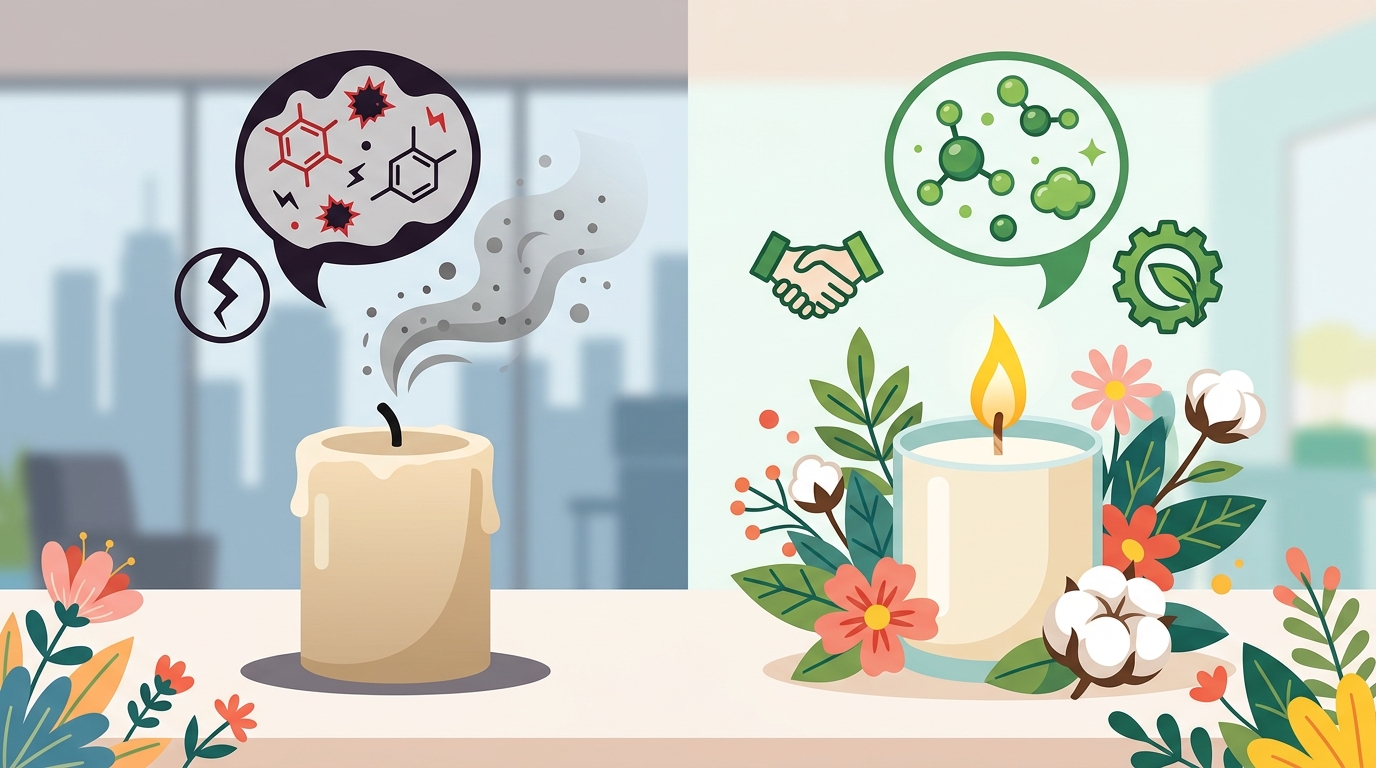
Assessing Longevity and Scent Throw
Scent throw refers to the intensity and diffusion rate of fragrance within a room. Cold throw measures the aromatic strength when the candle remains unlit, while hot throw evaluates dispersion during active combustion. Premium manufacturers optimize wax-to-oil ratios to maximize both metrics without compromising structural integrity. Health data
Key Takeaways
- Soy wax burns approximately forty percent longer than equivalent paraffin containers.
- Third-party laboratory testing remains the only reliable method for verifying emission claims.
- Essential oil formulations require precise temperature management to preserve therapeutic properties.
- Non-GMO agricultural sourcing directly correlates with consistent product quality and sustainability.
- Hand-poured manufacturing techniques significantly reduce tunneling and surface imperfections.
- Transparent ingredient disclosure remains a primary indicator of brand accountability and safety.
- Proper wick maintenance extends average burn duration by fifteen to twenty percent.
Frequently Asked Questions
Are all soy candles completely non-toxic?
Soy wax itself contains no harmful petroleum derivatives, but manufacturers must verify that added fragrances and dyes remain free from synthetic chemicals. Always review ingredient disclosures and prioritize brands that publish independent laboratory results.
How do I identify a genuinely clean burning candle?
Look for explicit statements regarding paraffin-free formulations, renewable packaging, and third-party emission testing. Reputable companies provide detailed safety documentation and transparent sourcing information.
Can essential oil candles provide therapeutic benefits?
Essential oil blends retain botanical properties when properly formulated and burned at recommended temperatures. Consistent diffusion rates allow aromatic compounds to interact with respiratory pathways without synthetic interference.
What wick material performs best for eco-friendly candles?
Cotton and wood wicks produce minimal soot when properly sized for container dimensions. Avoid metal-core wicks that may release trace heavy metals during high-temperature combustion.
How long should I burn a new candle before the first use?
Allow the wax pool to reach the container edges during the initial four-hour burn cycle. This process prevents tunneling and ensures even fuel consumption throughout the product lifespan.
Do eco-conscious brands use recyclable packaging?
Premium manufacturers utilize glass vessels, compostable shipping materials, and plant-based inks. Verify that selected brands participate in certified recycling programs or offer container return initiatives.
Is cold throw as important as hot throw?
Cold throw indicates initial fragrance quality and oil concentration levels. Brands that balance both metrics consistently deliver superior aromatic experiences across all usage scenarios.
Final Recommendation and Next Steps
Selecting the optimal all-natural candle brand requires evaluating material composition, emission transparency, and manufacturing ethics. Premium manufacturers that prioritize soy wax formulations, essential oil blending, and sustainable packaging consistently outperform legacy competitors. Consumers should verify third-party testing results, review ingredient disclosures, and prioritize brands that maintain transparent pricing structures. Explore our curated collection of hand-poured soy wax candles designed for maximum safety and aromatic performance. Visit our about page to learn about our sourcing commitments and manufacturing standards. Contact our team directly at https://myrubyandbegonia.com/contact for personalized fragrance recommendations and bulk ordering inquiries. Upgrade your home environment with scientifically validated, eco-conscious fragrance solutions today.
(99 Problems But the) (Apparel Accessories ndash Ruby) (Beach Bum ndash Ruby) (Bath Body ndash Ruby)