
Choosing the correct body butter is not merely a matter of scent preference. It is a critical skincare decision that determines hydration levels and skin barrier integrity. According to the American Academy of Dermatology, using the right emollient can significantly improve skin texture and reduce dryness-related irritation. This guide breaks down the selection process to ensure you match your unique skin needs with the optimal formulation.
Understanding Body Butter Composition
Body butter is a dense moisturizer designed to lock in moisture. Unlike lotions, which contain higher water content, body butters are anhydrous or low-water formulations. This density allows them to create a protective barrier on the skin surface. The primary ingredients usually include plant-based butters and oils.
Shea butter is a dense fat extracted from the nut of the shea tree. It is rich in fatty acids and vitamins A and E. These components help soothe inflammation and provide deep hydration. Cocoa butter is another common ingredient. It offers a solid texture that melts upon contact with warm skin. This property makes it excellent for sealing in moisture after a shower.
Understanding these base ingredients helps you predict how a product will interact with your skin. Some butters are heavier and more occlusive. Others are lighter and absorb more quickly. Your skin type dictates which balance is necessary for optimal results.
Strategies for Dry and Flaky Skin
If your skin feels tight, looks ashy, or flakes easily, you likely have dry skin. This condition often results from a compromised skin barrier or environmental factors like cold weather. For these skin types, heavy occlusion is key. You need a product that prevents water loss effectively.
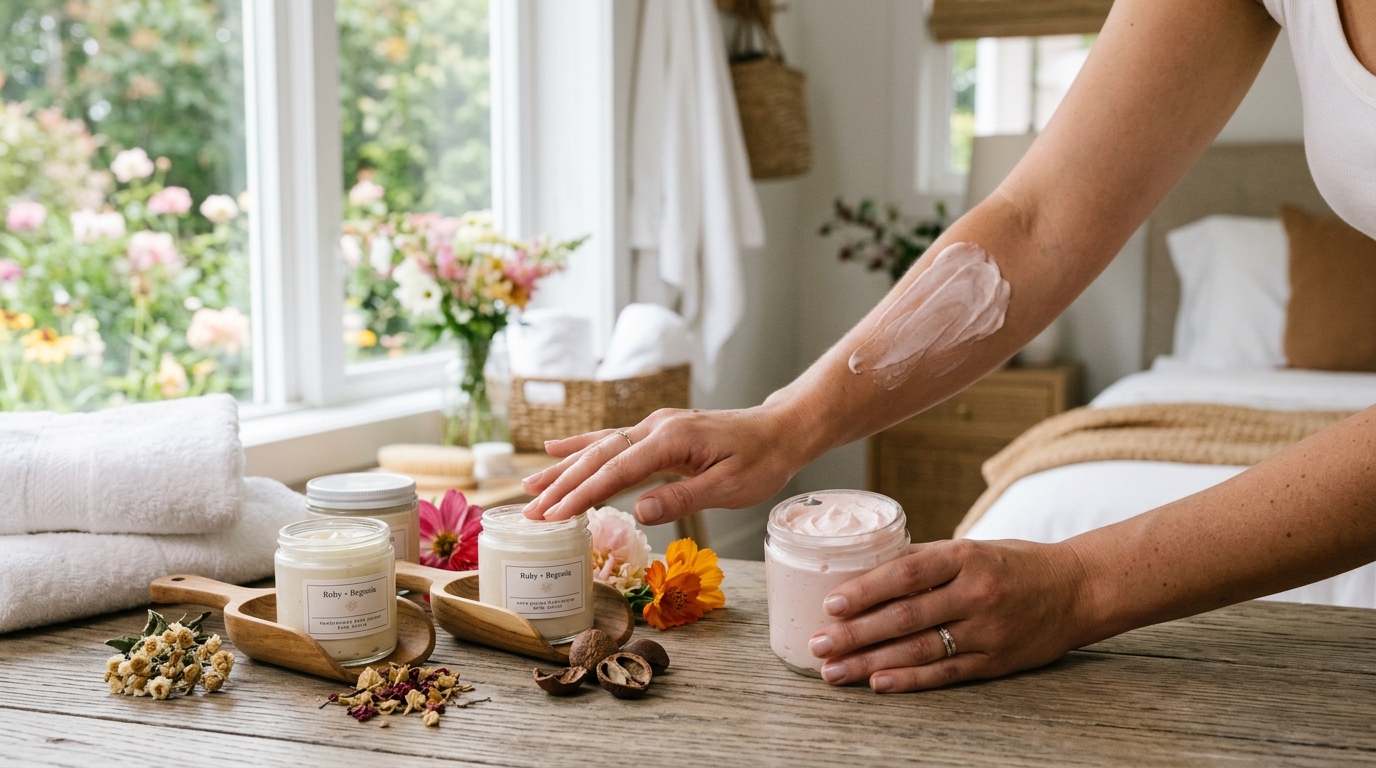
Look for body butters containing shea butter or cocoa butter as the primary ingredient. These ingredients are highly occlusive. They sit on top of the skin and block moisture evaporation. Ruby + Begonia offers a Whipped Body Frosting that is specifically designed for this purpose. The whipped texture allows for easier application while maintaining the dense hydration properties of traditional butters.
Apply your body butter immediately after bathing. Your skin should still be slightly damp. This technique traps the water on your skin. The butter then seals it in. This method is far more effective than applying the product to dry skin. It maximizes the hydration potential of every ounce you use.
Avoid products with high alcohol content. Alcohol can strip natural oils from the skin. This exacerbates dryness and causes further irritation. Stick to natural oils like coconut or jojoba oil for additional nourishment.
Navigating Sensitive Skin Triggers
Sensitive skin reacts easily to external stimuli. Redness, itching, and burning are common signs of sensitivity. When choosing a body butter for this skin type, ingredient simplicity is paramount. Complex fragrance blends can trigger allergic reactions.
Choose unscented or naturally scented options. Ruby + Begonia provides Whipped Bath Soap and body butters with clean, recognizable ingredients. Avoid synthetic fragrances and parabens. These are common irritants for reactive skin types.
Coconut milk is a gentle emollient derived from the meat of mature coconuts. It is known for its soothing properties and is often suitable for sensitive skin. It provides hydration without the heaviness of pure shea butter. This makes it a versatile option for those who need moisture but fear clogged pores.
Always perform a patch test before full-body application. Apply a small amount to your inner forearm. Wait 24 hours to check for any adverse reactions. This simple step can prevent significant discomfort and skin damage.
Managing Oily or Acne-Prone Skin
Many people with oily skin avoid body butters entirely. They fear clogged pores and greasy residue. However, oily skin still requires hydration. Dehydrated oily skin can overproduce sebum to compensate. This leads to more breakouts.
The key for oily skin is non-comedogenic ingredients. These are ingredients that do not clog pores. Look for lighter butters like mango butter or formulations with Silky Dry Oil properties. These products absorb quickly and leave a matte finish.
Avoid heavy cocoa butter if you are prone to body acne. It can be too occlusive for some oily skin types. Instead, opt for Coconut Milk Body Wash to cleanse the skin first. Follow with a lightweight moisturizer that contains hyaluronic acid. This ingredient draws moisture into the skin without adding oil.
Focus application on dry areas like elbows, knees, and heels. Avoid applying heavy butters to areas that are already prone to breakage. This targeted approach provides necessary hydration without overwhelming the skin.
Product Comparison Matrix
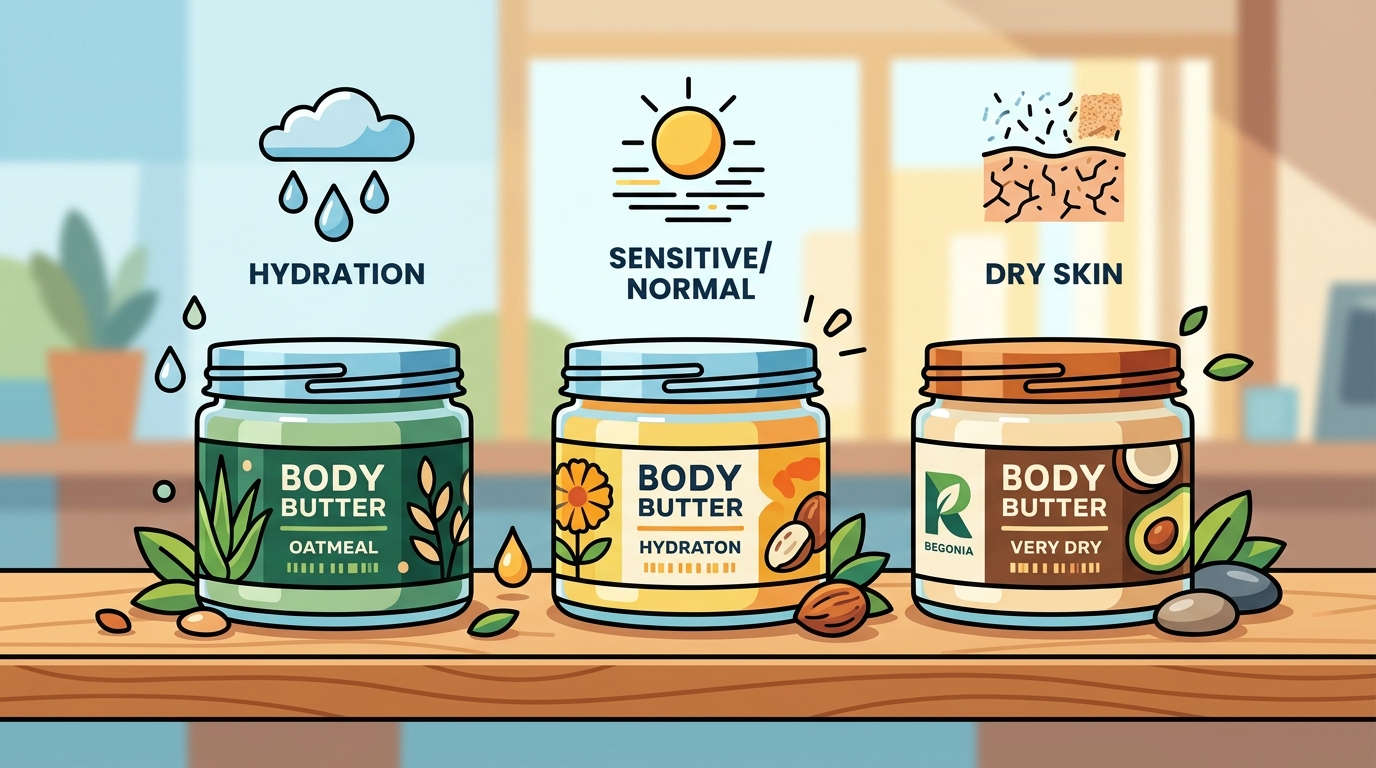
The table below summarizes the best Ruby + Begonia products for different skin types. This comparison helps you make an informed decision quickly.
| Skin Type | Recommended Product | Key Benefit | Best For |
|---|---|---|---|
| Dry Skin | Whipped Body Frosting | Deep Occlusion | Winter Hydration |
| Sensitive Skin | Whipped Bath Soap | Gentle Cleansing | Redness Reduction |
| Oily Skin | Silky Dry Oil | Quick Absorption | Non-Greasy Finish |
| Normal Skin | Body Butter Bar | Balanced Moisture | Daily Maintenance |
Key Takeaways
- Shea butter is a dense fat extracted from the nut of the shea tree, providing deep hydration.
- Apply body butter to damp skin to lock in moisture effectively.
- Sensitive skin types should avoid synthetic fragrances and opt for clean formulations.
- Oily skin can benefit from lightweight oils like the Silky Dry Oil to prevent clogged pores.
- Coconut milk is a gentle emollient derived from the meat of mature coconuts, suitable for soothing irritation.
- Always perform a patch test before introducing new body care products to your routine.
- Targeted application on dry areas like elbows and knees maximizes hydration benefits.
Frequently Asked Questions
Can I use body butter on my face?
Most body butters are too heavy for facial skin. They can clog pores and cause breakouts. Use a facial moisturizer specifically formulated for your face instead.
How often should I apply body butter?
Daily application is recommended, especially after bathing. Those with very dry skin may need to apply it twice a day to maintain hydration levels.
Is shea butter good for acne-prone skin?
Shea butter is non-comedogenic for most people. However, it can be too heavy for some acne-prone individuals. Test a small area first to see how your skin reacts.
What is the difference between body butter and lotion?
Body butter contains less water and more oils or butters. This makes it more concentrated and longer-lasting than standard lotions.
Does Ruby + Begonia offer unscented options?
Yes, Ruby + Begonia offers products with natural scents or minimal fragrance profiles. Check the Bath + Body collection for specific details on each product.
Can I use body butter in the summer?
Yes, but choose lighter formulations. The Silky Dry Oil is an excellent summer option that absorbs quickly without leaving a greasy residue.
How do I store body butter to keep it fresh?
Store body butter in a cool, dry place. Avoid direct sunlight and heat, which can melt the product and degrade its quality.
Shop Now
Ready to transform your skincare routine? Explore the full range of hydration solutions at Ruby + Begonia. Visit our Bath + Body collection to find the perfect match for your skin type. Start your journey to healthier, more hydrated skin today.