
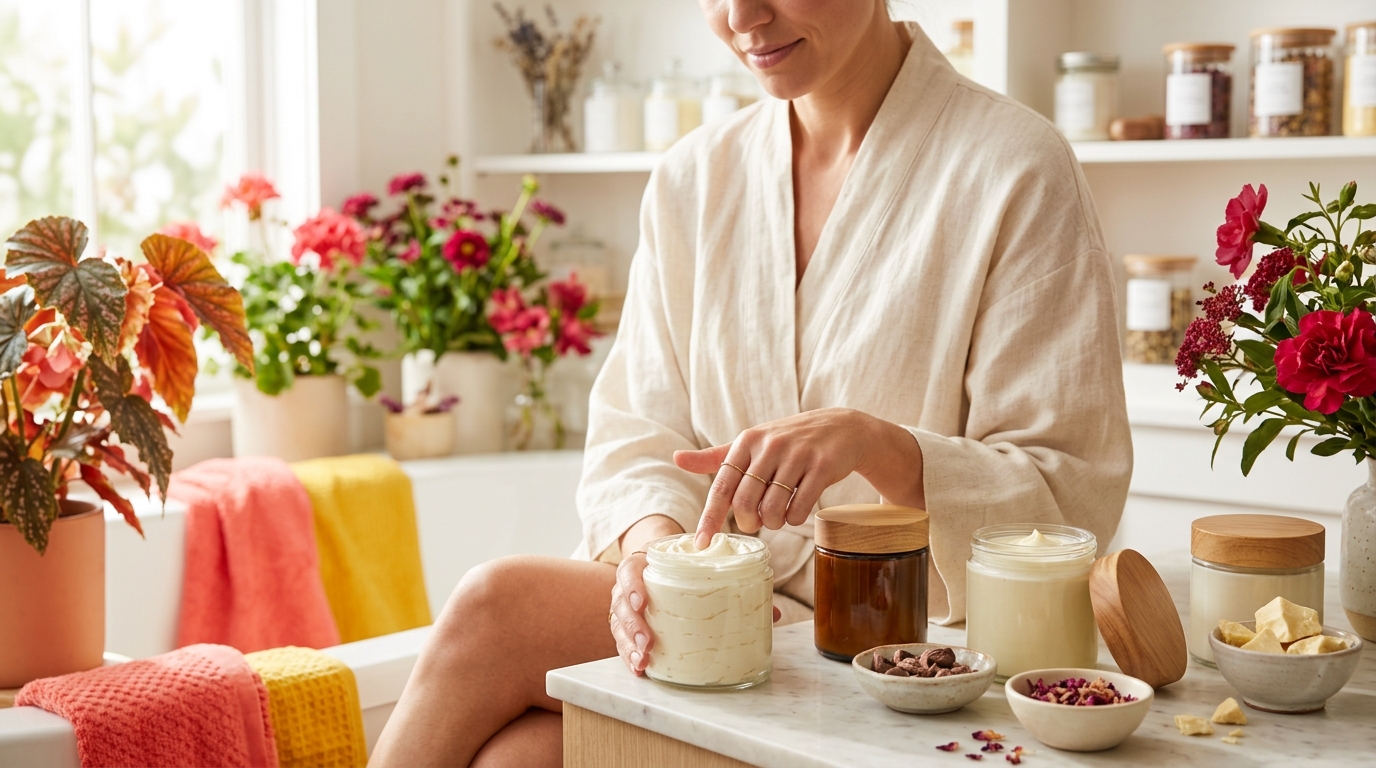
Hydration is the cornerstone of a resilient skin barrier, yet applying the wrong emollient can lead to congestion or irritation. According to the American Academy of Dermatology, using the correct moisturizer for your specific skin type is essential for maintaining barrier function and preventing transepidermal water loss. This guide breaks down the selection process to ensure you find a formula that nourishes rather than burdens your skin.
Understanding Body Butter Composition
Before diving into skin types, it is vital to understand what body butter actually is. Body butter is a thick, anhydrous moisturizer typically made from natural fats and oils. Unlike lotions, which contain a high percentage of water, body butters are designed to create an occlusive barrier on the skin. This barrier locks in moisture and protects against environmental stressors.
The primary ingredients in high-quality body butters include shea butter, cocoa butter, and mango butter. These ingredients are rich in fatty acids and vitamins that support skin health. Shea butter is a fat extracted from the nut of the shea tree, known for its high concentration of unsaponifiables. These unsaponifiables are the components that do not turn into soap during the saponification process, leaving behind potent moisturizing agents.
When choosing a body butter, look for products that prioritize natural ingredients over synthetic fillers. At Ruby + Begonia, we formulate our Whipped Body Frosting to provide deep hydration without clogging pores. The whipped texture allows for easier application and faster absorption compared to traditional solid butters.
Selection Guide for Dry and Flaky Skin
If your skin feels tight, looks dull, or flakes easily, you likely have dry skin. This condition often results from a compromised skin barrier that cannot retain moisture effectively. For dry skin, you need a heavy, occlusive formula that provides long-lasting relief.
Look for body butters containing shea butter and cocoa butter. These ingredients are excellent for softening rough patches and smoothing texture. Cocoa butter, in particular, is known for its ability to improve skin elasticity. Cocoa butter is a pale-yellow edible fat extracted from cocoa beans, widely used for its emollient properties.
Apply your body butter immediately after bathing while your skin is still damp. This technique traps water on the surface of the skin, enhancing the moisturizing effect. For extra dry areas like elbows, knees, and heels, consider using a thicker layer or a dedicated Body Butter Bar for targeted treatment.
Navigating Sensitive Skin Triggers
Sensitive skin reacts easily to external stimuli, resulting in redness, itching, or burning. The key to managing sensitive skin is minimizing potential irritants. Fragrances, both natural and synthetic, are common triggers for sensitive skin types.
When selecting a body butter for sensitive skin, opt for unscented or mildly scented options. Ruby + Begonia offers a range of Whipped Bath Soap and body butters with subtle, natural fragrances that are less likely to cause irritation. Always check the ingredient list for known allergens such as lanolin or specific essential oils.
Perform a patch test before applying a new product to your entire body. Apply a small amount to the inner forearm and wait 24 hours to observe any reactions. If no irritation occurs, the product is likely safe for broader use. For those who enjoy aromatherapy, our Soy Wax Candles can create a calming environment for your self-care routine without the risk of skin irritation.
Strategies for Oily and Acne-Prone Skin
Many people with oily skin avoid body butters entirely, fearing clogged pores. However, oily skin still requires hydration. The goal is to find a non-comedogenic formula that moisturizes without adding excess oil to the skin surface.
Look for body butters that contain lighter oils such as jojoba oil or grapeseed oil. These oils mimic the skin's natural sebum and are less likely to cause breakouts. Avoid heavy butters like coconut oil if you are prone to body acne. Instead, choose a Silky Dry Oil for a lightweight alternative that absorbs quickly.
Focus application on drier areas of the body, such as the arms and legs, rather than the chest or back where oil glands are more active. Consistent hydration can actually help regulate oil production by signaling the skin to produce less sebum. Our Coconut Milk Body Wash provides a gentle cleanse that prepares the skin for optimal moisturizer absorption.
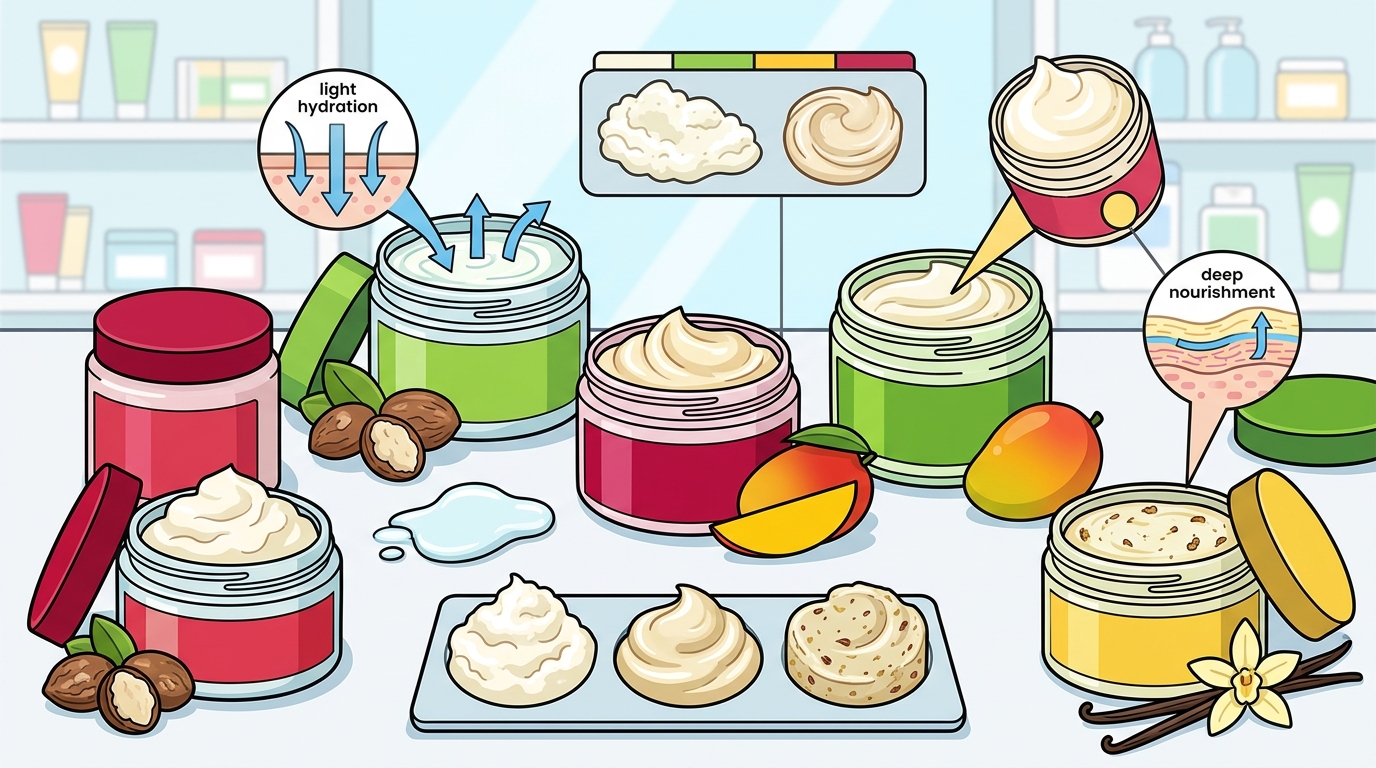
Product Comparison Matrix
The following table compares key product attributes to help you make an informed decision based on your skin type.
| Product | Best For | Key Ingredient | Texture | Fragrance Profile |
|---|---|---|---|---|
| Whipped Body Frosting | Dry to Normal Skin | Shea Butter | Light & Airy | Natural Botanicals |
| Body Butter Bar | Very Dry/Flaky Skin | Cocoa Butter | Rich & Dense | Unscented Options |
| Silky Dry Oil | Oily/Acne-Prone Skin | Jojoba Oil | Fluid & Fast-Absorbing | Light Citrus |
| Whipped Sugar Scrub | All Skin Types (Exfoliation) | Sugar Crystals | Granular | Sweet & Warm |
Key Takeaways
- Match the Formula to Your Skin Type: Use heavy butters for dry skin and lightweight oils for oily skin.
- Apply to Damp Skin: Locking in moisture immediately after bathing maximizes hydration benefits.
- Prioritize Natural Ingredients: Shea and cocoa butters provide superior nourishment compared to synthetic alternatives.
- Check for Irritants: Those with sensitive skin should avoid strong synthetic fragrances and opt for natural scents.
- Consider Texture Preferences: Whipped butters offer easier application and faster absorption than solid bars.
- Use Targeted Treatments: Apply thicker products to rough areas like elbows and knees for best results.
- Explore Complementary Products: Pair your body butter with a matching Room + Linen Spray for a cohesive sensory experience.
Frequently Asked Questions
Can I use body butter on my face?
Generally, body butters are too heavy for facial skin and may cause breakouts. It is best to use a dedicated facial moisturizer formulated for the delicate skin on your face.
How often should I apply body butter?
For most skin types, applying body butter once daily after showering is sufficient. Those with very dry skin may benefit from a second application during the day.
Is whipped body butter better than solid?
Whipped body butter is easier to spread and absorbs faster than solid butter. Both provide similar hydration levels, but the whipped texture is often preferred for daily use.
What is the difference between body butter and lotion?
Body butter is anhydrous, meaning it contains no water, making it more concentrated and occlusive. Lotions contain water and are lighter, making them suitable for normal to oily skin types.
Are natural fragrances safe for sensitive skin?
Natural fragrances can still cause irritation in some individuals. It is advisable to choose unscented products or perform a patch test before full-body application.
Can body butter help with stretch marks?
While body butter cannot eliminate existing stretch marks, keeping the skin hydrated and elastic may help prevent new ones from forming during periods of rapid growth.
How do I store body butter to maintain its quality?
Store body butter in a cool, dry place away from direct sunlight. Heat can cause the butter to melt and lose its structural integrity.
What is the shelf life of natural body butter?
Most natural body butters have a shelf life of 12 to 18 months. Always check the expiration date on the packaging for the most accurate information.
Shop Now
Ready to transform your skincare routine? Explore our curated collection of Whipped Body Frosting and other premium body care products. Visit our Shop Collections page to find the perfect match for your skin type today.